
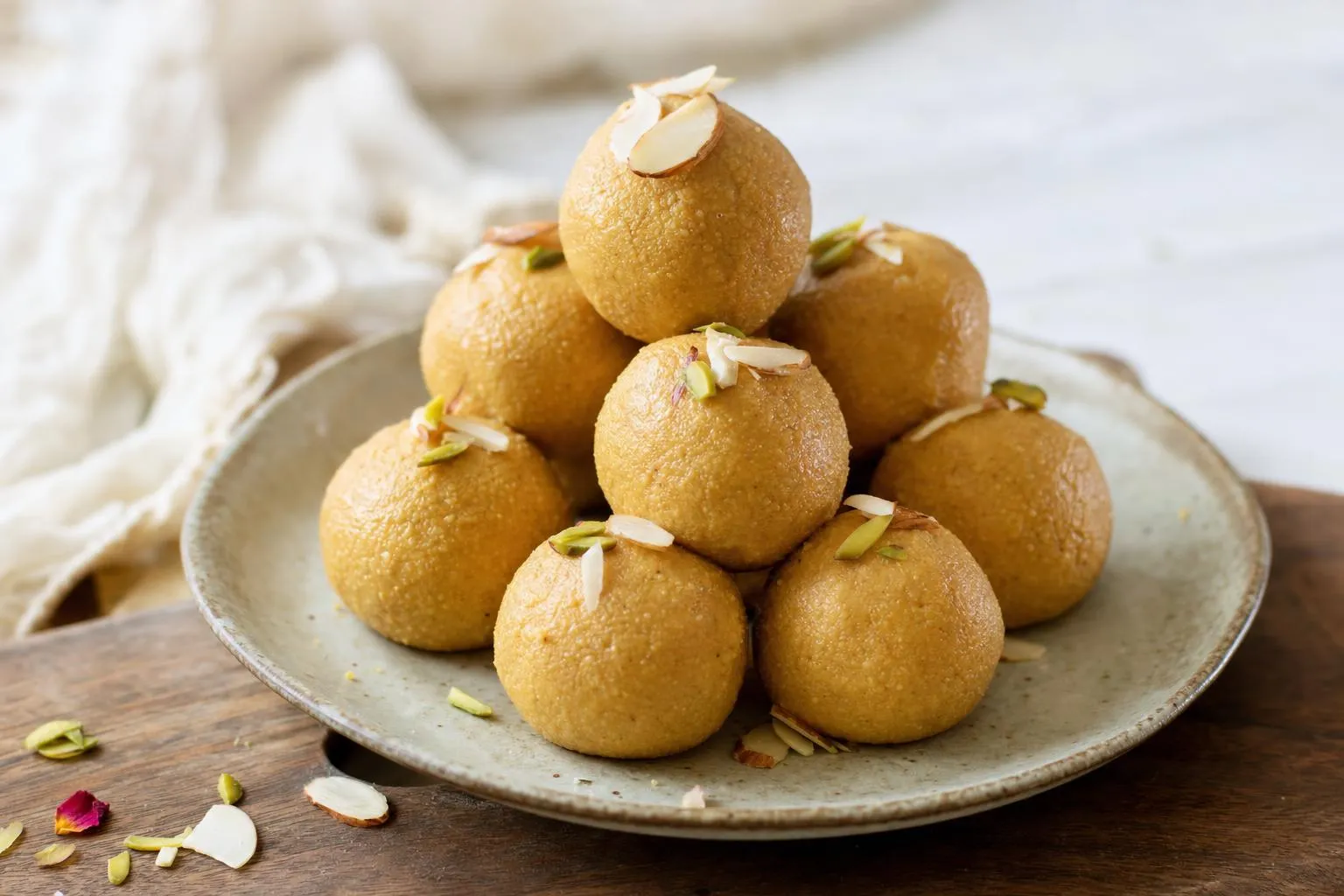
Besan Ladoo (Gram Flour Sweet Balls)
Ghee-roasted gram flour ladoo with the slow-roast technique that gets the grainy, melt-in-the-mouth texture right every time.
Besan ladoo is made by roasting coarse gram flour in melted ghee over low-medium heat for 25-30 minutes until it turns deep golden and smells distinctly nutty, then cooling it to warm before stirring in powdered sugar and cardamom and rolling into balls. The single decisive step is roasting long enough and slow enough — stopping too early leaves a raw, chalky taste, while rushing the heat burns the besan before it cooks through.
VegetarianNo wheat Gram flour contains no wheat, but check your besan — some brands are milled alongside wheat and carry a cross-contamination warning. Contains cashews or almonds.
Besan ladoo looks like the easiest mithai on the list. Flour, ghee, sugar, roll into balls. Then it goes wrong, and it goes wrong the same way for nearly everyone — the ladoo taste faintly raw, or they refuse to hold together at all.
Both failures trace back to one place. Not the sugar, not the shaping. The roast. Everything else here is assembly.
The roast is the whole recipe
Gram flour is raw when it goes into the pan. It carries a dusty, slightly bitter edge that no amount of sugar hides. Roasting it in ghee drives that off and builds the nutty flavour people mean when they say a ladoo tastes like it came from a proper mithai shop. Budget 25 to 30 minutes on low-medium heat. Higher heat browns the outside of each grain while the inside stays starchy, and starchy is what you are tasting when a ladoo seems chalky.
The mixture moves through three stages, and the middle one fools people. First it is pale, stiff and foamy. Around twelve minutes it loosens and turns pourable, close to thick pancake batter. Most cooks stop here. Keep going. By the twenty-minute mark it thickens again, pulls back from the sides of the pan, and the smell turns unmistakable. Trust the smell over the clock, because every stove and pan runs differently.
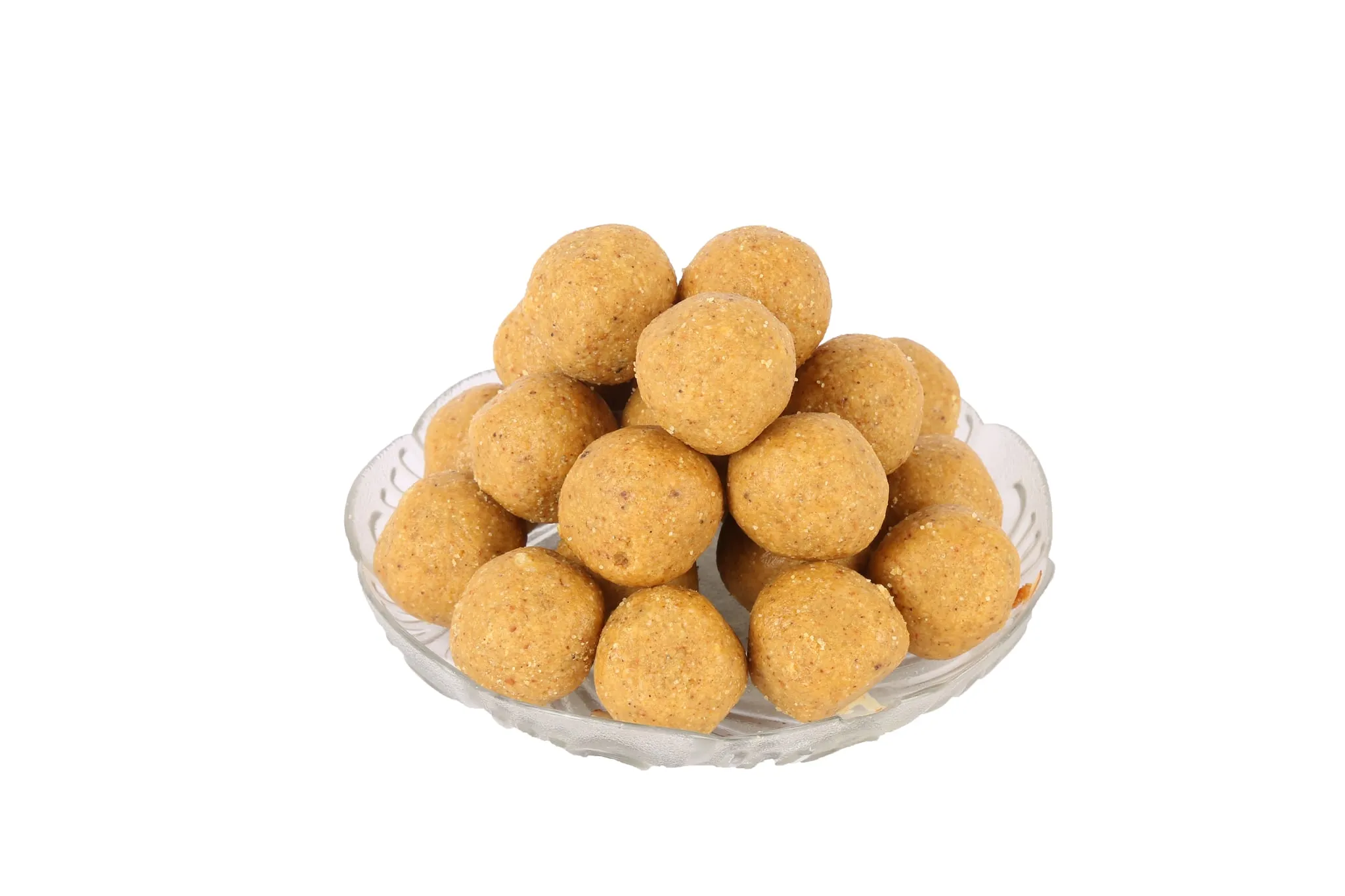
Two ingredients are worth sorting out before you start. Coarse besan, sometimes labelled laddu besan, gives the slightly sandy bite of a shop ladoo. The fine grind sold for pakoras works, but it scorches faster and needs closer watching. Boora, the soft coarse-crystal sugar traditionally folded through, is not sold outside India at all; sifted icing sugar is the accepted stand-in. If an hour at the stove is more than you have tonight, coconut ladoo gets you to a finished sweet in twenty minutes. And if you like this kind of slow, fat-and-sugar work, kaju katli is the same idea with the sugar cooked to a syrup instead.
The other besan ladoo in every sweet-shop window is motichoor ladoo, and it shares almost nothing with this one but the flour. There the besan is a thin batter, fried through a slotted spoon into tiny pearls and soaked in syrup before it is shaped, which is why it comes out soft and moist where this one is sandy and rich.
Reading the roast
-
0–8 min
Pale, stiff and foamy
- Smell
- Dusty, like raw flour.
- In the pan
- A thick, foamy paste that resists the spoon.
Keep stirring.
-
Around 12 min
Loose and pourable
- Smell
- Still mostly raw.
- In the pan
- Suddenly runny, like thick pancake batter.
Not done. This is where most people stop.
-
20–30 min
Thick again, deep gold Stop here
- Smell
- Clearly nutty and toasted, like roasted peanuts.
- In the pan
- Pulls back from the sides in one glossy mass, with ghee at the edges.
Done. Take it off the heat a shade early: the pan keeps cooking it.
-
Past that
Dark brown
- Smell
- Sharp and bitter.
- In the pan
- Darkening fast; it will taste gritty.
Too far, and nothing fixes it. Start again.
Ingredients
Tap an ingredient to cross it off as you go.
Instructions
- Sift the besan into the pan before you turn on any heat — coarse besan especially hides lumps and clumps that won't break down once ghee goes in.
- Melt the ghee separately if it's solid, then pour it over the besan in a cold pan and mix into a thick, sandy paste before you start heating. This prevents the flour from clumping into hard nuggets the moment it hits heat.
- Set the flame to low-medium and start stirring, and don't stop for more than a few seconds at a time. For the first 8-10 minutes the mixture will look pale, foamy, and slightly resistant to the spoon — this is besan releasing raw moisture, not the roast itself.
- Around the 12-15 minute mark it loosens and turns pourable, almost like thick pancake batter, and the raw, dusty smell fades into something faintly toasted. Keep going — this is the stage most people mistake for 'done' and stop too early, leaving ladoo that taste chalky and raw.
- Between 20-30 minutes the colour deepens to a warm honey-gold to light caramel, the mixture thickens again and starts pulling slightly away from the pan sides, and the smell turns unmistakably nutty and roasted, like warm popcorn. Add the cashews and raisins in the last 5 minutes so they toast lightly in the residual ghee.
- Take the pan off the heat the moment you hit that deep gold colour and roasted smell — the mixture keeps cooking in its own heat for another minute or two, and it's easy to tip it into burnt-bitter territory if you wait for a visual cue that's already too dark.
- Spread the mixture on a plate and let it cool until it's warm but not hot to touch, roughly 15-20 minutes. This waiting is non-negotiable: add sugar while it's too hot and it melts into a sticky mess instead of staying granular, and if you try to shape ladoo while it's hot, they'll never hold together once cool.
- Stir in the sifted powdered sugar and cardamom powder once the mixture is warm, mixing thoroughly so there are no dry pockets.
- Take portions a little smaller than a golf ball and press firmly between your palms into round balls — press hard enough that they compact, not so hard that ghee weeps out. If the mixture won't hold, it's usually too dry or too cool; work in another teaspoon of warm ghee and try again.
- Press a piece of cashew or almond on top of each ladoo and let them sit uncovered for a couple of hours before storing, so the surface sets.
Ingredient guides: Besan (Gram Flour): Coarse vs Fine, and How to Roast ItKhoya (Mawa)
Ingredient swaps for cooks abroad
- Boora (soft, coarse-crystal sugar traditionally used in besan ladoo) is nearly impossible to find outside India — sifted powdered/icing sugar is the standard workaround and gives a very close texture, just avoid the cornstarch-heavy 10X kind if you can, or sift it twice to remove excess starch taste.
- Fine besan works if coarse besan isn't available (check South Asian grocers or brands like Laxmi, Deep, or Swad) — reduce roasting time slightly and stir more often since fine besan browns faster and scorches more easily.
- Ghee is essential to the flavour and shouldn't be swapped for oil, but if you're making a lighter batch, you can replace up to a quarter of the ghee with a neutral oil — expect a slightly less rich aroma and a marginally softer set.
- Ground cardamom loses potency fast; if you only have pre-ground, use double the stated amount, or better, crack whole green cardamom pods and grind the seeds fresh in a mortar just before using.
Frequently asked questions
- What does properly roasted besan smell like?
- Raw gram flour smells dusty and flat, a little like uncooked pastry. Properly roasted besan smells nutty and warm, closest to popcorn or toasted sesame, and the colour shifts from pale yellow to honey-gold. If you are unsure, it is almost always underdone rather than overdone.
- How long do besan ladoo keep?
- Besan ladoo keep for 2-3 weeks in an airtight container at room temperature, because the high ghee content preserves them. In a humid kitchen or a US or UK summer, refrigerate them for 6-8 weeks instead. Bring them back to room temperature before serving so the ghee softens.
- Can I use oil instead of ghee?
- Not entirely. Ghee carries most of the flavour in besan ladoo and helps them firm up as they cool, so oil alone gives a flat, slightly greasy result. Replacing up to a quarter of the ghee with a neutral oil is the most you can get away with.
- My ladoo crumble when I try to shape them. What now?
- Crumbling means the mixture is too dry or has cooled too far. Work in a teaspoon of warm melted ghee, then try again while it is still warm to the touch. If it is cold, set the plate over a low flame for twenty seconds to loosen it before you re-roll.
You might also like
View all →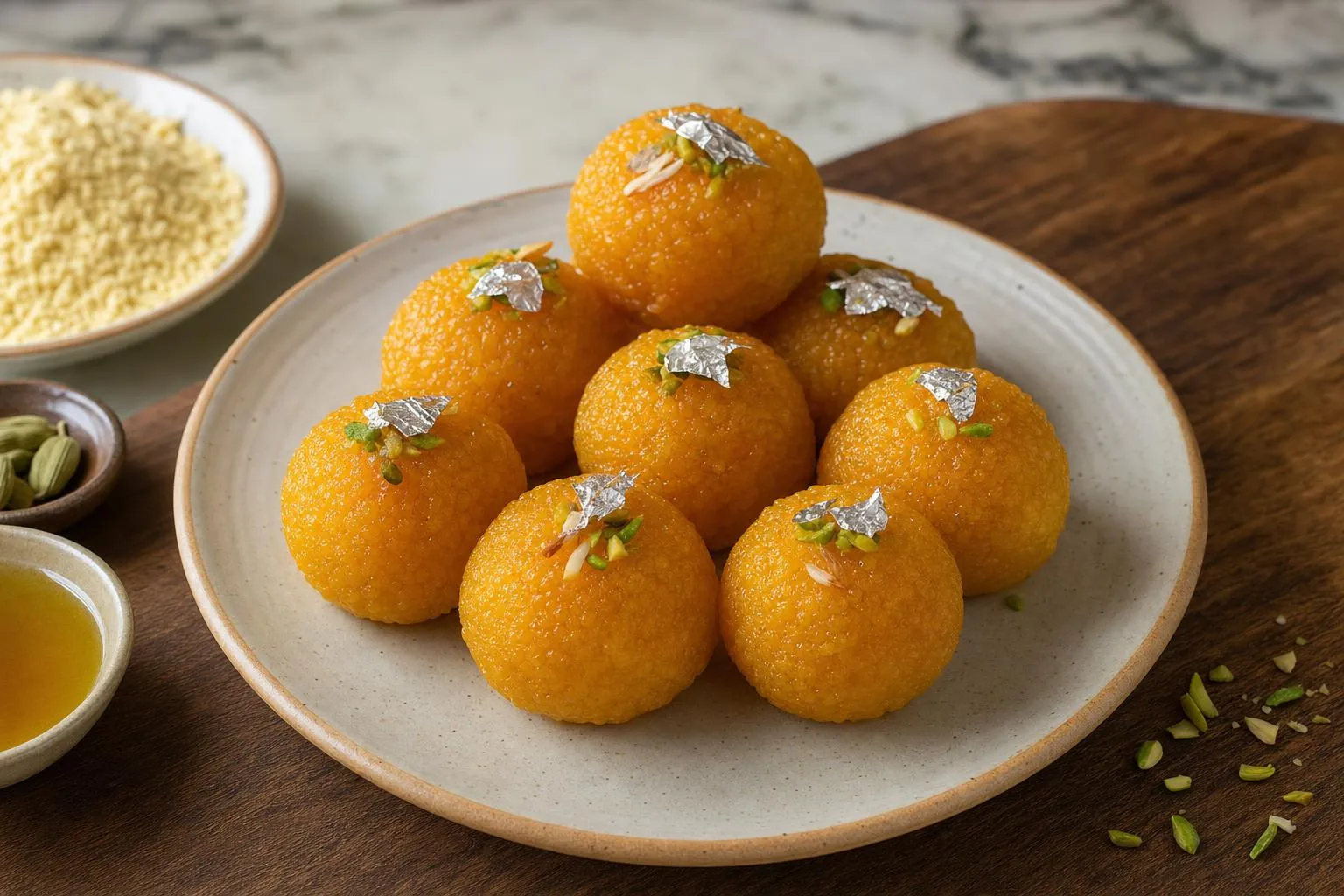 1 hr 15 min
Motichoor Ladoo (No Jhara Needed)
Tiny fried boondi pearls, soaked in syrup and bound into soft ladoo, made with just a slotted spoon.
 30 min
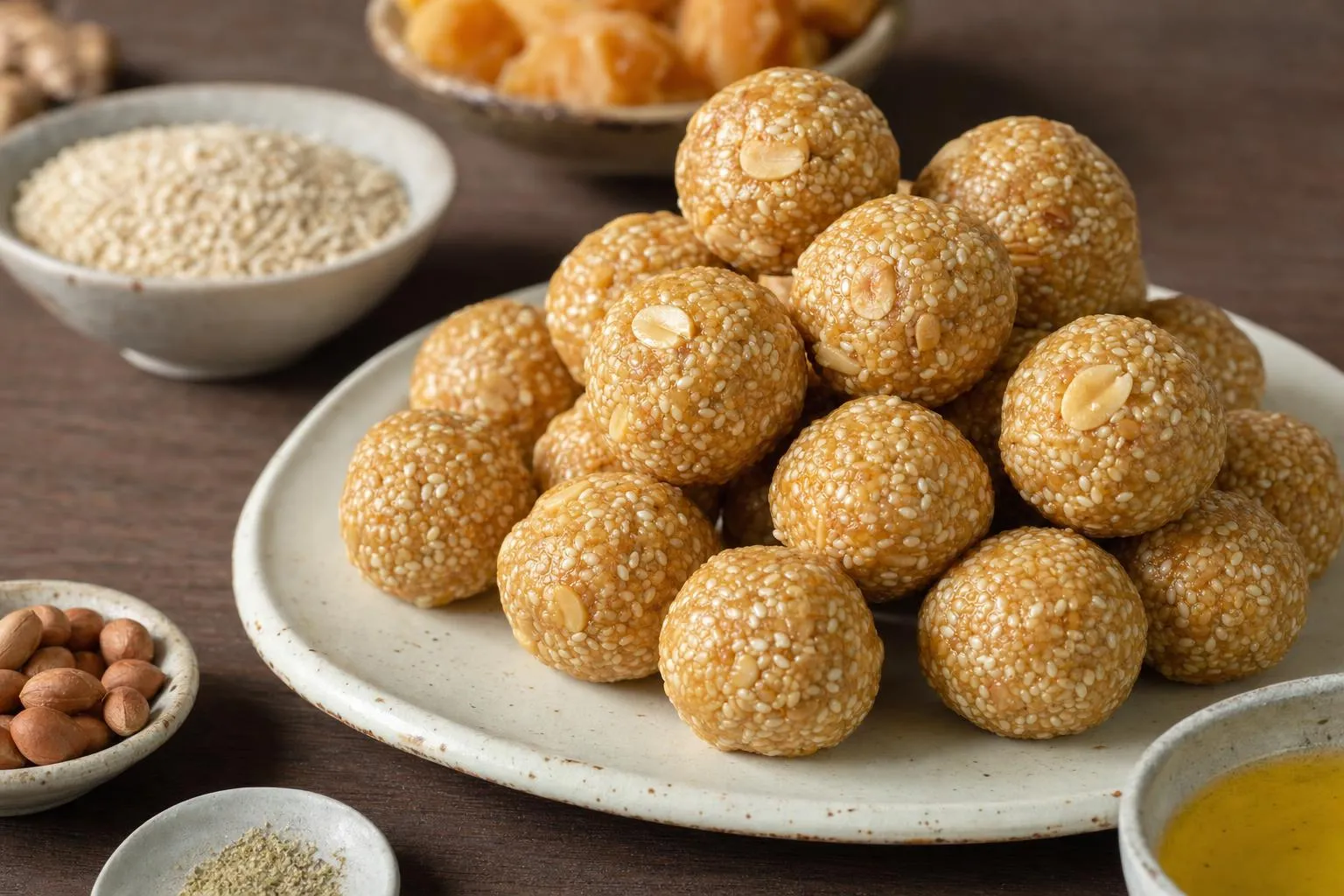
Til Ladoo (Sesame Jaggery Ladoo) for Sankranti
Toasted sesame and melted jaggery, shaped into warm balls the traditional Makar Sankranti way.
 1 hr
Tiranga Barfi (Three-Colour Barfi)
A khoya barfi built in three coloured layers that fuse into one slab if each pour is timed right.