
Motichoor Ladoo (No Jhara Needed)
Tiny fried boondi pearls, soaked in syrup and bound into soft ladoo, made with just a slotted spoon.
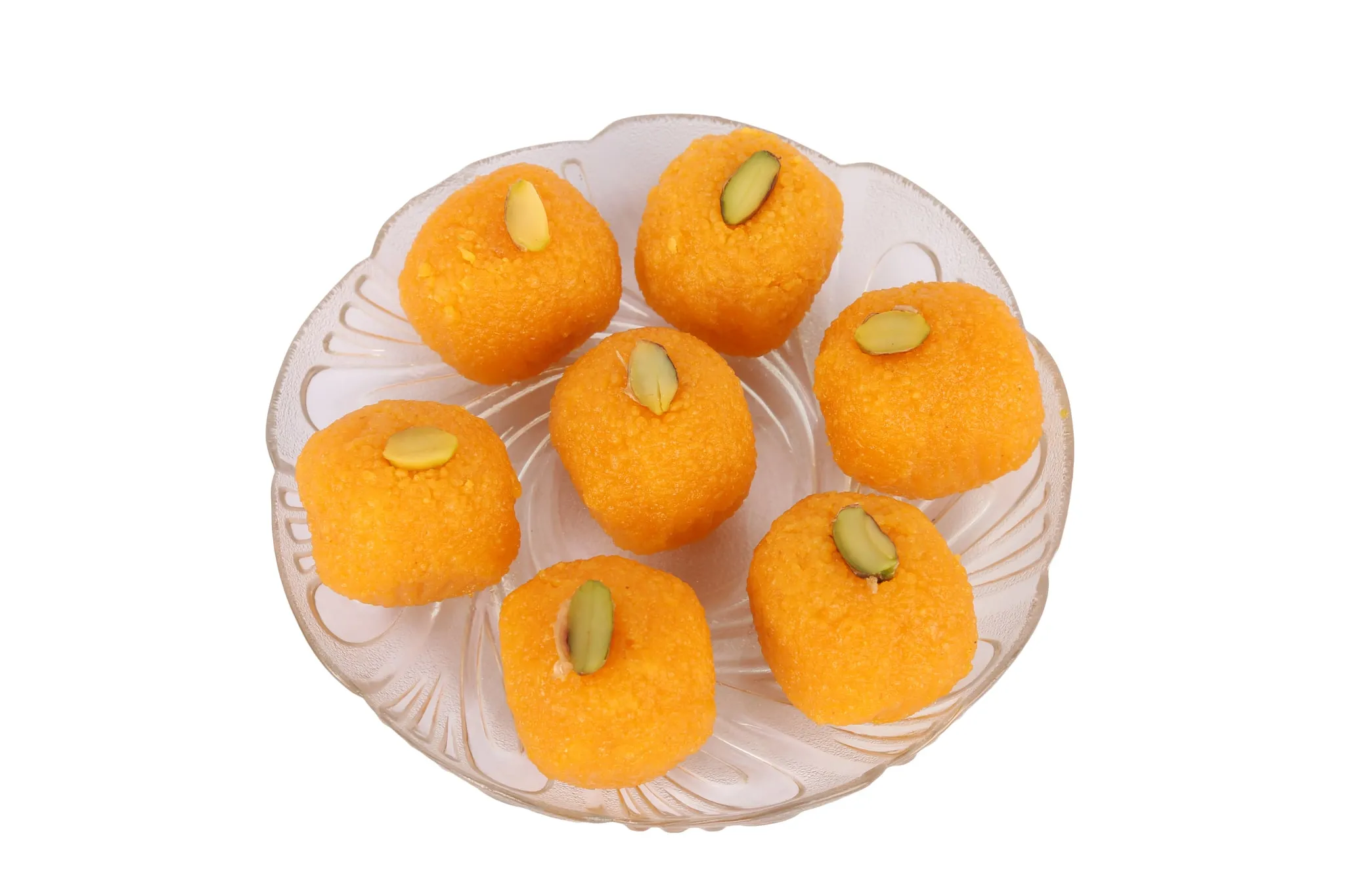
Motichoor ladoo are made by frying besan batter through a slotted spoon into tiny round boondi pearls, soaking them warm in cardamom syrup, and shaping them into balls while everything is still warm. The one thing that makes or breaks this at home: the boondi must be small, round, and barely golden — oversized or browned boondi won't drink enough syrup to bind, and the mixture will crumble when you try to shape it.

Motichoor means “crumbled pearls” — and that’s exactly what you’re making before you ever shape a ladoo. Hundreds of tiny fried besan beads, soaked soft in syrup, then pressed gently into balls. It’s a different animal from besan ladoo, which is one smooth roasted dough. Here the texture comes from scale: the smaller and rounder each boondi pearl, the softer and more cohesive the finished ladoo.
Most diaspora kitchens don’t have a jhara, the perforated brass spoon Indian halwais use to drop batter into hot oil in one practiced motion. You don’t need one. A regular slotted spoon with small round holes, the kind sold for draining pasta or frying, does the job almost as well once you get the rhythm of tapping or shaking it over the kadai. The real skill isn’t the tool. It’s reading two things correctly: when the batter is the right thickness, and when the boondi is fried just enough to hold its shape without turning tough.
Slotted spoon or jhara?
A jhara gives you dozens of uniform little beads with every pass, because its holes are stamped to a consistent small size. A home slotted spoon has fewer holes and they’re often slightly larger, so your boondi will come out a bit less uniform in size. That’s fine. What matters more is motion and distance. Hold the spoon close to the oil — about two inches. Too high, and the batter splatters or stretches into tails instead of round drops. Tap or shake with short, quick movements, not one long shake, so the beads release evenly rather than clumping.
If you want to see how sugar syrup stages work across different sweets, the one-string stage used here is the same test used in kaju katli, just cooked less far. And if this is your first time working with boondi at all, it’s worth making a half batch first — the technique becomes obvious after the first ten minutes at the stove, and a failed test batch of loose boondi can always be pressed into a rough mithai crumble instead of wasted.
Ingredients
Tap an ingredient to cross it off as you go.
Instructions
- Whisk the besan with water until it runs off the whisk in a thin, smooth ribbon, like a thick dosa batter. No lumps, no streaks of dry flour. Rest it for 10 minutes.
- Heat ghee or oil in a wide, shallow kadai over medium heat. Hold a flat slotted spoon (a regular metal one with small round holes works fine) about 2 inches above the oil.
- Pour a ladleful of batter onto the back of the spoon and tap the edge of your hand against your wrist, or shake the spoon gently side to side, so batter drips through as tiny round beads. Fry each batch 60-90 seconds, just until the boondi is set and pale gold, not browned. Lift out and drain.
- Repeat in batches, keeping the oil at a steady medium heat — too hot and the boondi browns before cooking through, too cool and it turns into flat, chewy blobs instead of round pearls.
- Make the syrup: dissolve sugar in water over medium heat, simmer 4-5 minutes to one-string consistency — a drop pulled between two fingers forms a single thin thread. Stir in cardamom and food colour.
- Tip the warm boondi straight into the warm syrup. Add nuts and mix gently with a spatula so every pearl gets coated. Let it sit 8-10 minutes — the boondi should look glossy and swollen, having drunk back most of the syrup, but a little loose liquid should still pool at the bottom of the bowl.
- While the mixture is still warm (not hot, not cool), grease your palms with melted ghee and gather a small fistful. Press just enough to make the boondi cling, then release — do not knead or squeeze hard.
- Shape into balls about the size of a small lime, working quickly while the batch is warm. If it cools and stops binding, warm it for 20-30 seconds in a microwave or over a low flame and try again.
- Set the ladoo on a tray, garnish with silver leaf if using, and let them firm up at room temperature for a couple of hours before stacking.
Ingredient guides: Besan (Gram Flour): Coarse vs Fine, and How to Roast It
Ingredient swaps for cooks abroad
- No besan on hand? Supermarket chickpea or garbanzo bean flour works for the batter, though it is often milled from a different chickpea and can be coarser, so check it is finely ground and sieve it twice like the besan.
- Ghee can be swapped for a neutral oil like sunflower or canola for frying if you want a lighter version, though you lose some of the characteristic aroma.
- Skip the food colour entirely for a more natural pale golden ladoo — common in home kitchens outside festival season.
- No silver leaf (varak, the edible metal foil used as garnish)? A few extra chopped pistachios on top look just as festive.
Frequently asked questions
- My boondi came out as long tails or teardrops instead of round beads — what went wrong?
- This usually means the batter was too thin, or the spoon was held too far from the oil. Thicken the batter slightly with a tablespoon more besan whisked in, hold the spoon about two inches above the oil, and use short, quick taps rather than a slow pour.
- Why won't my motichoor ladoo hold together when I try to shape them?
- The boondi is either over-fried (dry and hard, so it can't absorb syrup) or the syrup was too thick or too cool when mixed in. Boondi should still be warm and the syrup at one-string consistency; let the mixture sit together for a few minutes before shaping so the pearls soften and cling to each other.
- Can I use a hand mixer or food processor to speed up making the batter?
- A whisk by hand is enough and gives you more control over consistency, but a hand mixer on low for 30-60 seconds works fine too. Avoid a food processor — it can overwork the batter and make it gummy.
- How do I scale this recipe up for a large batch, say for a Diwali party?
- Double or triple the besan, water, and sugar quantities, but fry the boondi in the same small batches as a single recipe — overcrowding the oil drops the temperature and gives soggy, pale boondi. Make the syrup fresh for each batch of boondi rather than one giant batch, since it cools and thickens too fast to mix in evenly otherwise.
- What should the ladoo mixture look like right before I start shaping?
- It should look glossy and swollen, with the boondi having absorbed most of the syrup but a small amount of loose liquid still visible at the bottom of the bowl. If it looks dry and separate, add a tablespoon of warm syrup or water before shaping.
You might also like
View all →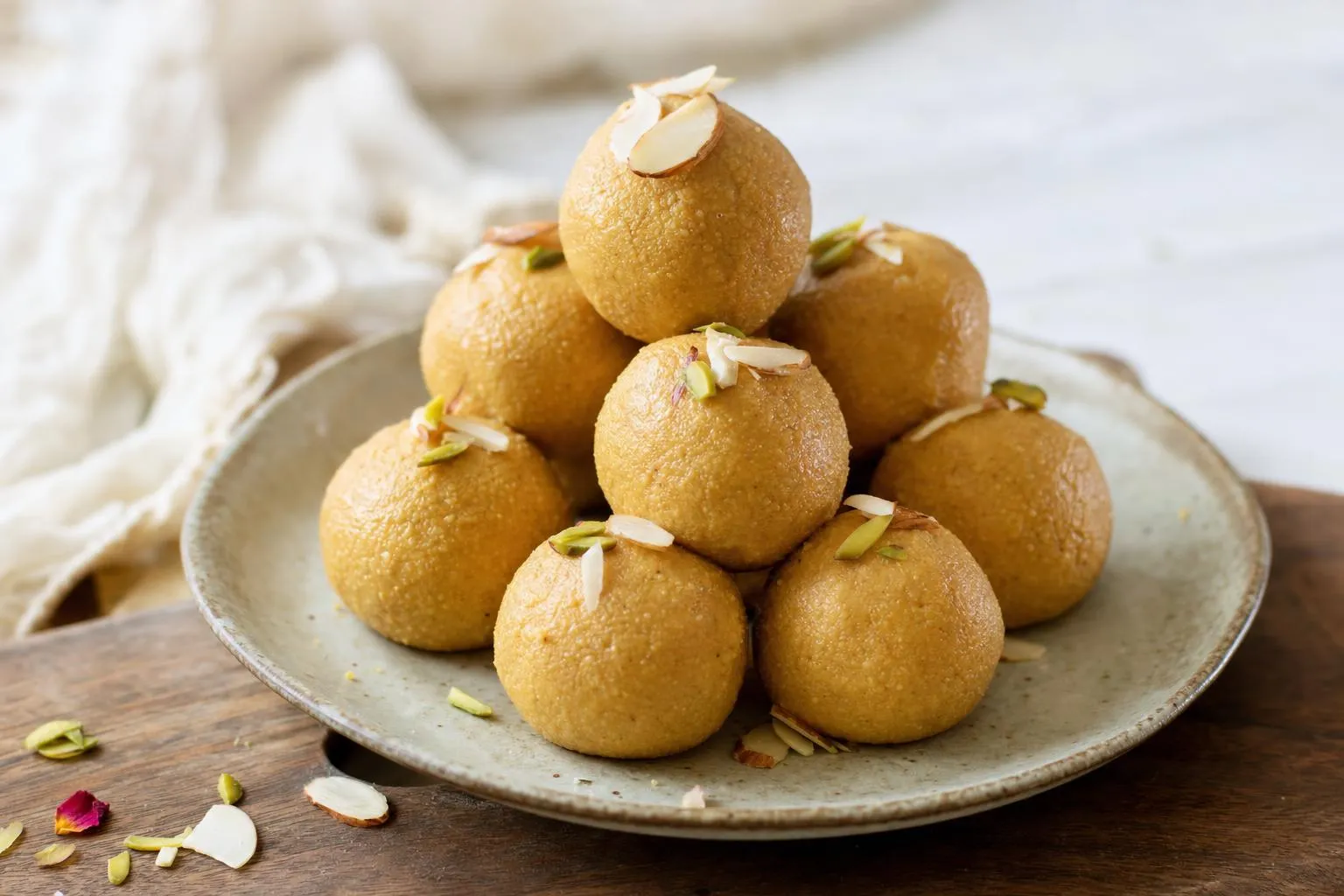 45 min
Besan Ladoo (Gram Flour Sweet Balls)
Ghee-roasted gram flour ladoo with the slow-roast technique that gets the grainy, melt-in-the-mouth texture right every time.
 30 min
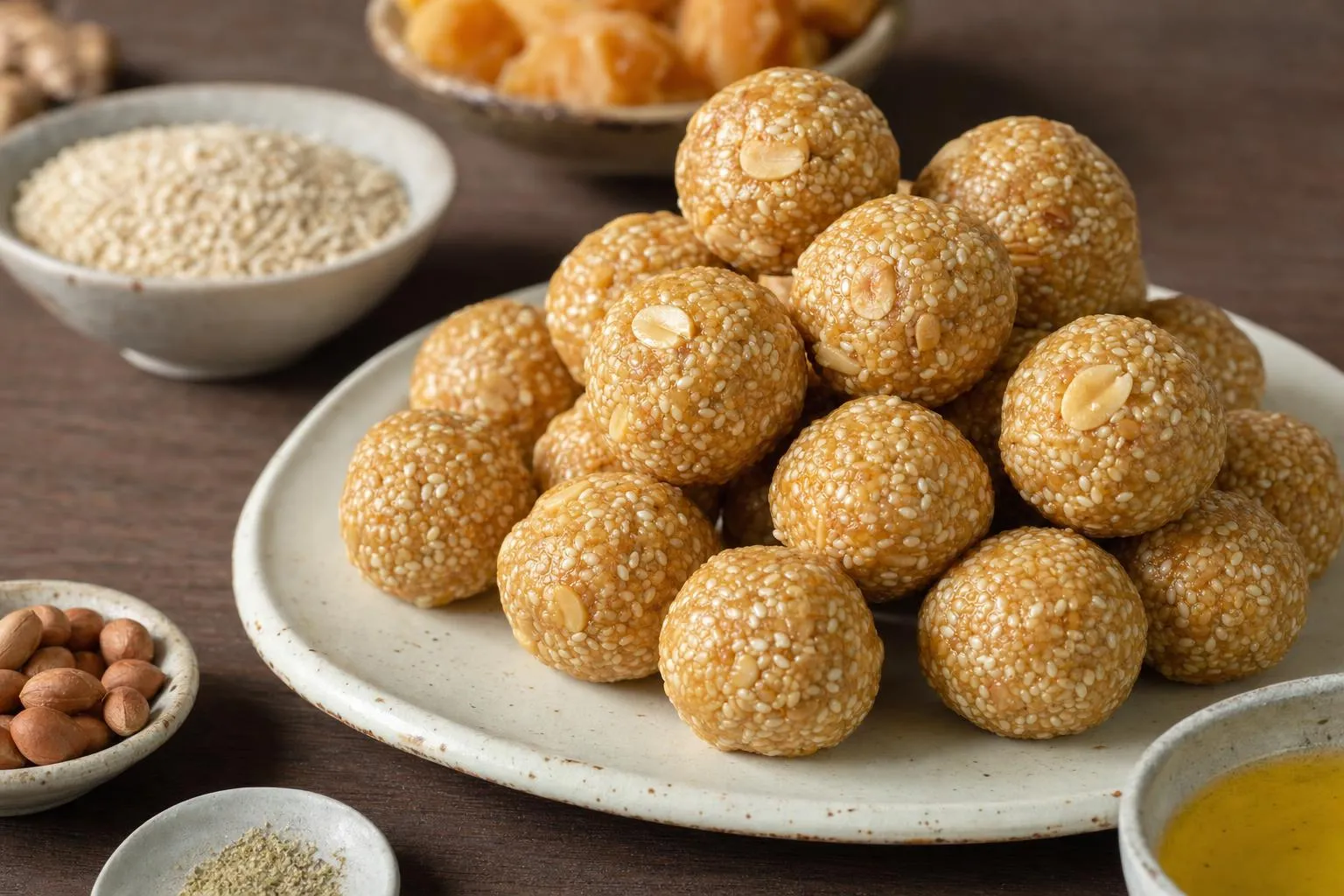
Til Ladoo (Sesame Jaggery Ladoo) for Sankranti
Toasted sesame and melted jaggery, shaped into warm balls the traditional Makar Sankranti way.
 1 hr
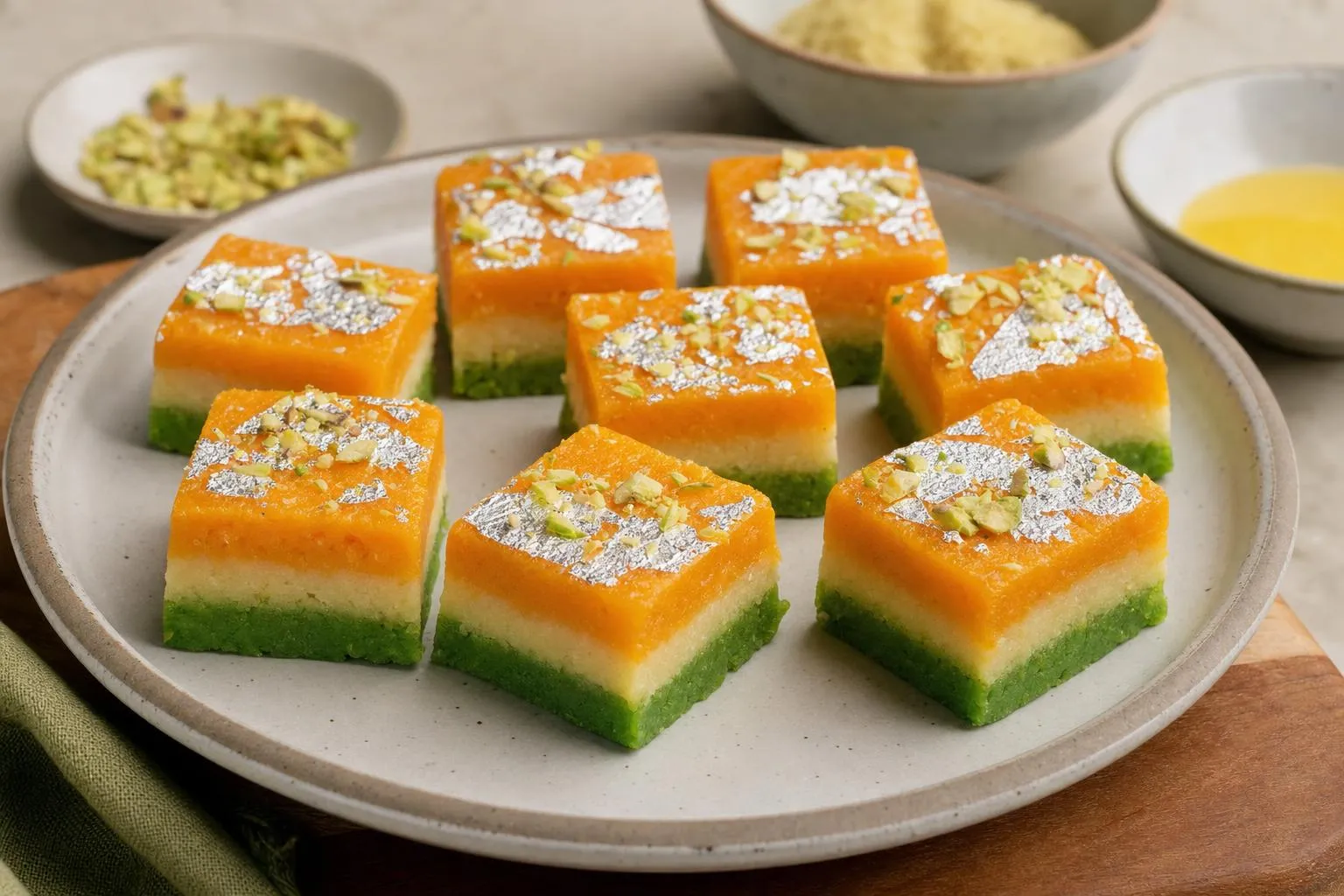
Tiranga Barfi (Three-Colour Barfi)
A khoya barfi built in three coloured layers that fuse into one slab if each pour is timed right.