
Besan (Gram Flour): Coarse vs Fine, and How to Roast It
The flour behind ladoo, barfi, mohanthal and soan papdi, which grind each sweet wants, and how to tell by smell and colour when it has roasted enough.
Besan is flour milled from chana dal, the small split brown chickpea, and it is the base of besan ladoo, besan barfi, mohanthal, motichoor and soan papdi. Two things decide how a besan sweet turns out. The first is the grind: coarse besan gives the sandy, grainy bite of a shop ladoo or mohanthal, while fine besan gives a smoother set and scorches faster. The second is the roast: raw besan tastes beany and bitter, and it has to be cooked slowly in ghee until it smells nutty and turns golden, which takes 20 to 35 minutes on low heat for ladoo, barfi and mohanthal.
Also sold as gram flourchana flourchickpea flour
Besan is ground chana dal. Chana is the small brown chickpea grown across India, and chana dal is that chickpea split and skinned, which is why the flour comes out pale yellow rather than the colour of the whole bean. English packets usually call it gram flour, after Bengal gram, the old trade name for the same chickpea.
It is one of the few mithai ingredients that is easy to buy abroad. It is also the one most often used wrongly, because a bag of besan looks finished and it is not. Raw, it tastes of dust and beans with a bitter edge. Every sweet on this site that is built on it, from besan ladoo to soan papdi, spends most of its cooking time just turning that raw flour into something that tastes good.
Gram flour is not quite chickpea flour
The word chickpea covers two different crops. The small, dark desi chickpea is the one Indian kitchens split into chana dal and mill into besan. The large, pale kabuli chickpea is the one sold in tins in a Western supermarket, and flour labelled chickpea flour or garbanzo bean flour is often milled from that.
The two are close enough to swap in a pakora batter. For sweets the difference shows more. Flour from the large chickpea tends to be a little coarser, a little beanier, and it takes up ghee and syrup differently, so a recipe written for besan can come out heavier or slightly pasty. If the packet says besan or gram flour, or you are buying from a South Asian grocer, you have the right thing. If it says chickpea or garbanzo flour, it will work, but it is the second choice.
Coarse or fine
Besan is milled to different grinds, and Indian grocers often sell more than one. The fine grind is the everyday one, the flour for pakora batters and kadhi. The coarse grind is sold for sweets, sometimes labelled laddu besan, barfi besan or just coarse besan, and it feels faintly gritty between your fingers, like fine semolina.
That grit is the texture. It is what makes a shop besan ladoo sandy and slow to melt, and it is the whole character of mohanthal, which depends on each coarse granule soaking up ghee before it is roasted. Coarse besan is also easier to roast, because the larger particles brown more slowly and give you longer to judge them.
Fine besan works for all of these, with two costs. The sweet comes out smoother and denser, which sits closer to the fudgy set of besan barfi and furthest from mohanthal’s grain. And it scorches sooner, so roast it for about five minutes less and stir without stopping near the end. If you want to fake a coarse grind, the mohanthal recipe adds two tablespoons of fine semolina to sifted fine besan. It gets close, though it adds wheat.
Supermarkets outside India almost always sell only the fine grind. Coarse besan is mostly found at South Asian grocers.
Roasting: smell first, then colour
Besan sweets are roasted in ghee over low heat, and the time is not negotiable. On higher heat the outside of each granule browns while the inside stays raw and starchy, and that is what you are tasting when a ladoo is chalky. The besan ladoo page has a diagram of the stages. In words, the mixture goes through three of them.
Stiff and pale. At first the besan and ghee form a thick, foamy paste that resists the spoon and smells of raw flour.
Loose. Around twelve minutes in, the starch cooks and the fat is released, and the mixture suddenly turns runny, close to a thick batter. This is the stage that fools people, because it looks done. It is not.
Thick again. Keep going and it tightens back up, starts to pull away from the sides of the pan, darkens, and the smell changes from raw to unmistakably nutty, like roasted peanuts. This is where you stop.
How far to take the colour depends on the sweet. Besan ladoo stops at a deep gold. Besan barfi goes a little further, to a warm biscuit-brown about the colour of light peanut butter. Mohanthal, already rubbed with ghee in the dhabo, is taken to the deep gold of old brass. Soan papdi roasts besan together with plain flour for a much shorter time, 12 to 15 minutes, because its texture comes from the pulled syrup rather than the roast.
Trust the smell over the clock. Stoves and pans vary too much for a timer to mean anything. Pull the pan off the heat a shade early rather than late, because the heat stored in a heavy pan keeps cooking it for a minute after you stop. Besan that has gone too far turns dark, smells sharp rather than nutty, and tastes bitter and gritty. Nothing fixes that, so start again.
The one sweet where it isn’t roasted
Motichoor ladoo uses besan the other way: as a thin batter, dropped through a slotted spoon into hot oil to make the tiny pearls called boondi. Here the frying does the cooking, and the grind works the other way round. Coarse besan makes uneven, ragged pearls. Fine besan, sieved twice and whisked to a smooth ribbon with no dry streaks, makes round ones that soak up syrup evenly.
Buying and keeping it
Most UK supermarkets sell gram flour in the world-foods aisle, and in the US it is easiest to find at Indian grocers, where it is labelled besan. Buy a bag you will use within a few months. The flour has enough natural oil to go stale, and stale besan smells musty and bitter, which no amount of roasting removes.
Keep it airtight, away from the stove. In a warm or humid kitchen, keep it in the fridge or freezer, and let it come back to room temperature in its sealed bag before opening it, so it doesn’t pick up moisture. Besan is a favourite of pantry weevils, so an old bag is worth sieving and checking before it goes in the pan. Sieving is worth doing anyway: besan lumps in the bag, and the lumps never fully roast.
Frequently asked questions
- Is besan the same as chickpea flour?
- Close, but not always identical. Besan is milled from chana dal, the small brown chickpea split and skinned. Flour sold in Western shops as chickpea or garbanzo bean flour is often milled from the larger pale chickpea instead, and it can be a little coarser and taste beanier. It works in batters and in a pinch for the sweets here. For ladoo and barfi, flour labelled gram flour or besan, from a South Asian grocer or the world-foods aisle, is the safer buy.
- How do I know when besan is roasted enough?
- Go by smell first and colour second. Raw besan smells dusty and faintly bitter; roasted besan smells clearly nutty and toasted, like roasted peanuts. Over low heat in ghee it goes from pale and stiff, to loose and almost pourable, to thick again and pulling away from the sides of the pan. Stop when it has turned golden to biscuit-brown and the raw smell is completely gone. For ladoo, barfi and mohanthal that takes 20 to 35 minutes, not ten. Soan papdi is the exception, at 12 to 15 minutes, because it roasts besan together with plain flour.
- Should I use coarse or fine besan for ladoo and barfi?
- Coarse, if you can find it. It is what gives besan ladoo and mohanthal their sandy, grainy bite, and it is more forgiving because it browns more slowly. Fine besan, the kind sold for pakoras, still works: the sweet comes out smoother and denser, and it needs about five minutes less roasting and closer watching. Motichoor is the exception. Its batter wants fine, well-sieved besan so the pearls come out round and smooth.
- Is besan gluten-free?
- Chickpeas contain no gluten, so besan is naturally wheat-free. Some brands are milled alongside wheat and carry a cross-contamination warning, so check the packet if it matters to you. Soan papdi is not wheat-free as written, because it is roasted together with plain flour, and the fine-besan swap on the mohanthal page adds semolina, which is wheat.
- How long does besan keep, and how do I know it has gone off?
- A few months in a sealed container somewhere cool and dark, and longer in the fridge or freezer, which is worth it in a warm, humid kitchen. Old besan smells musty or sharply bitter instead of faintly sweet and beany, and that taste survives the roast. Besan is also a favourite of pantry weevils, so keep it airtight and check an old bag before you use it.
Where it comes up
View all →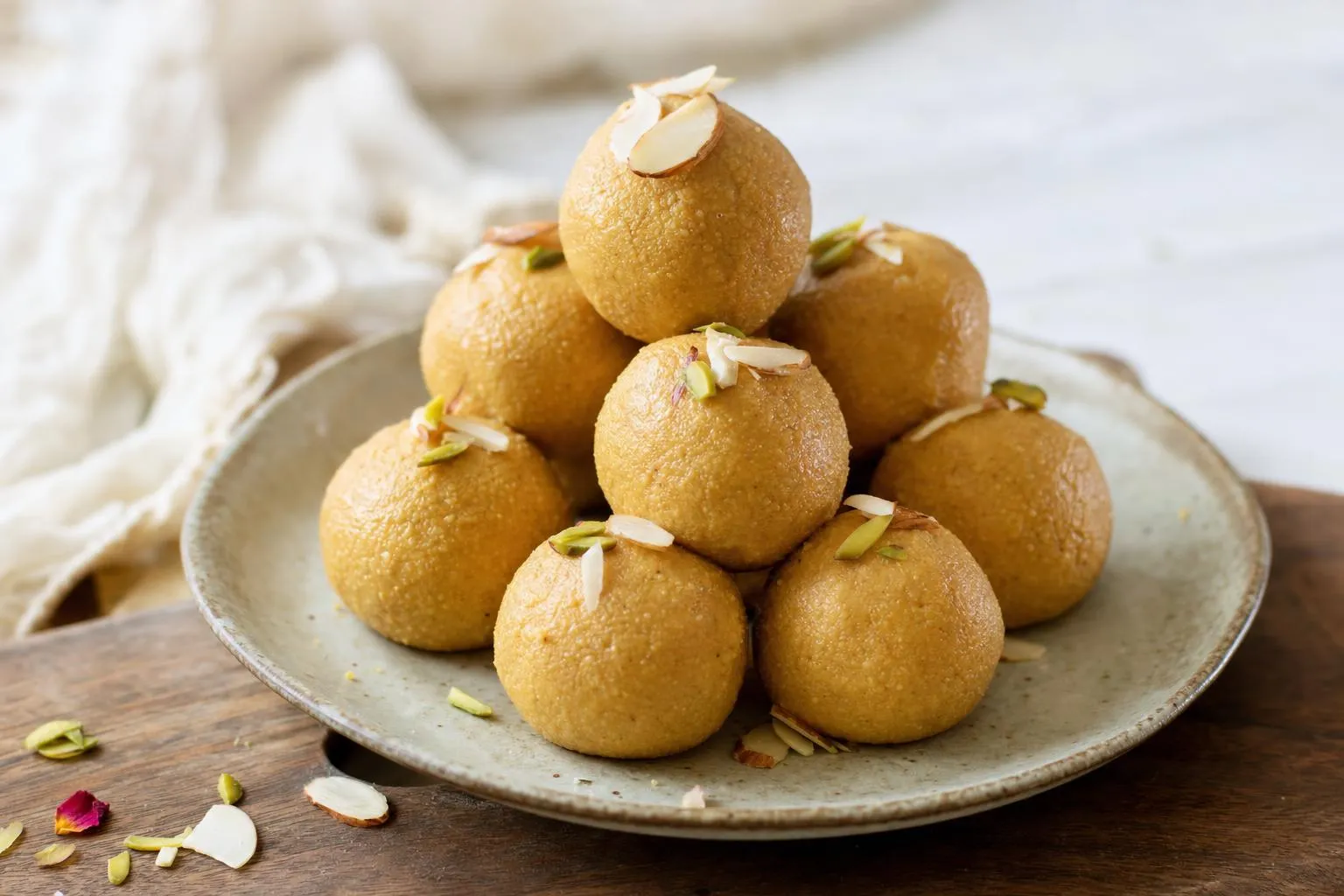 45 min
Besan Ladoo (Gram Flour Sweet Balls)
Ghee-roasted gram flour ladoo with the slow-roast technique that gets the grainy, melt-in-the-mouth texture right every time.
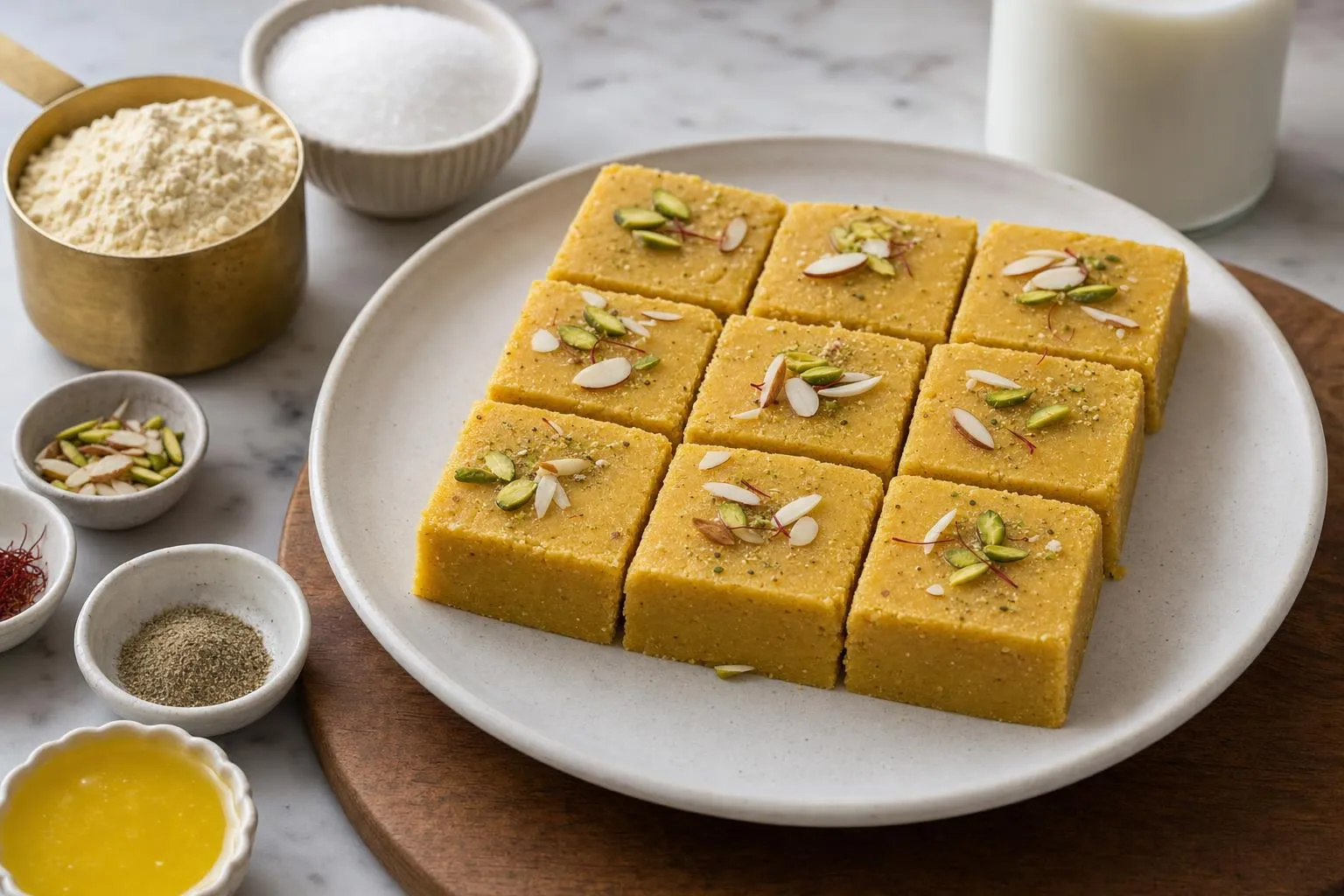 50 min
Besan Barfi (Fudgy Gram Flour Barfi)
A dense, fudgy besan barfi that depends on roasting the gram flour to a deep amber shade before it meets the sugar.
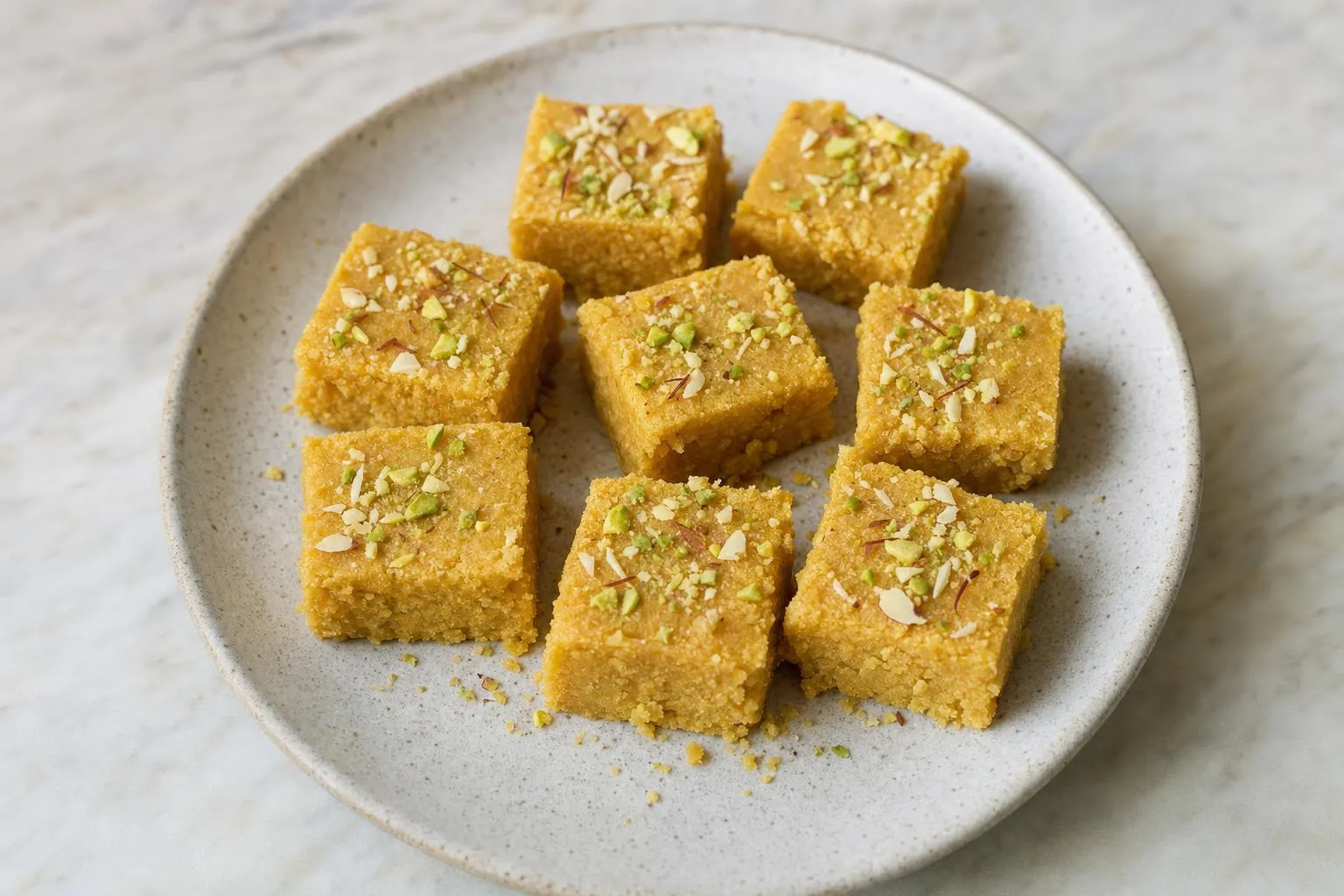 1 hr 5 min
Mohanthal (Gujarati Besan Barfi)
A grainy, ghee-rich Gujarati besan barfi, with the texture built in at the dhabo stage before roasting.
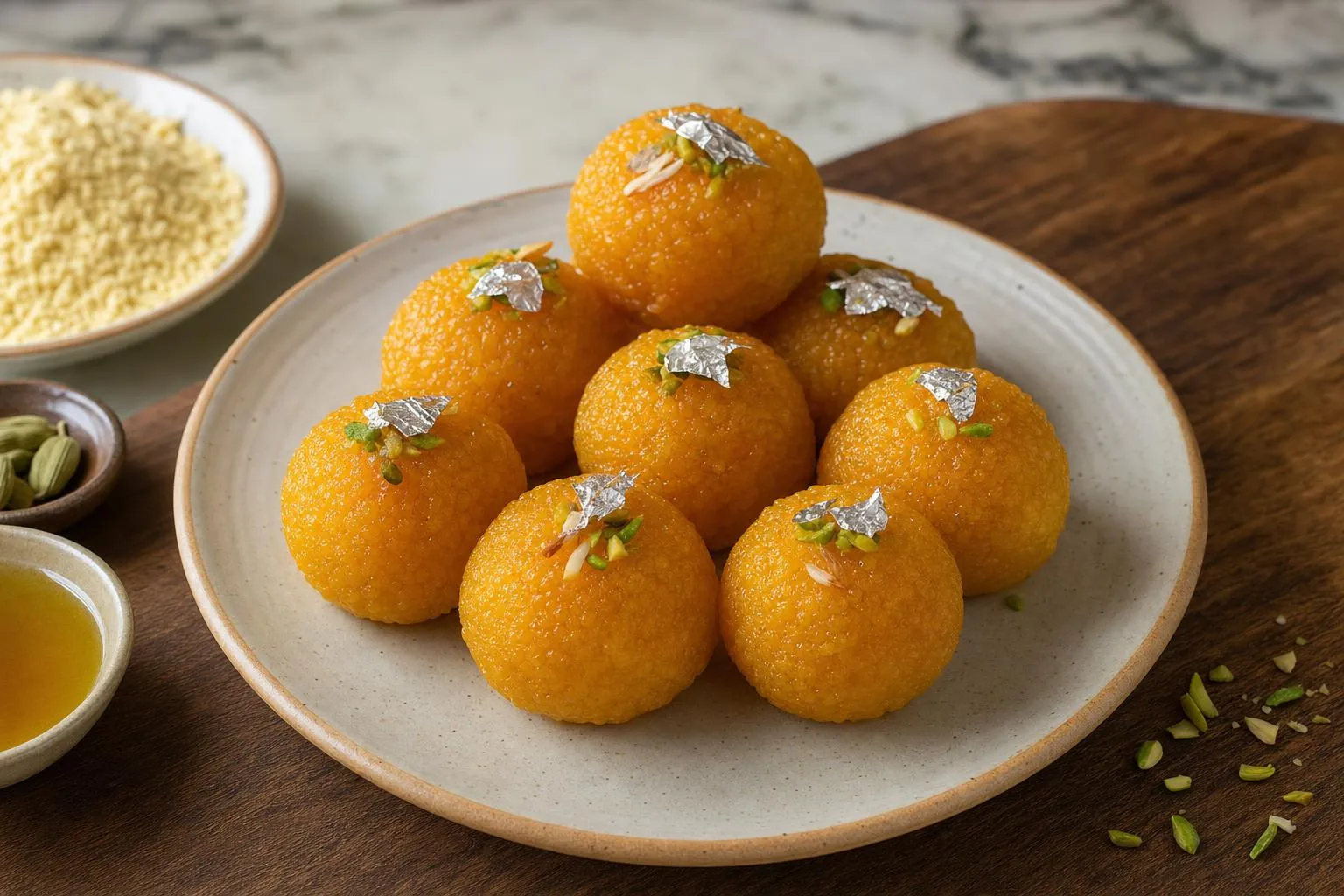 1 hr 15 min
Motichoor Ladoo (No Jhara Needed)
Tiny fried boondi pearls, soaked in syrup and bound into soft ladoo, made with just a slotted spoon.
 1 hr
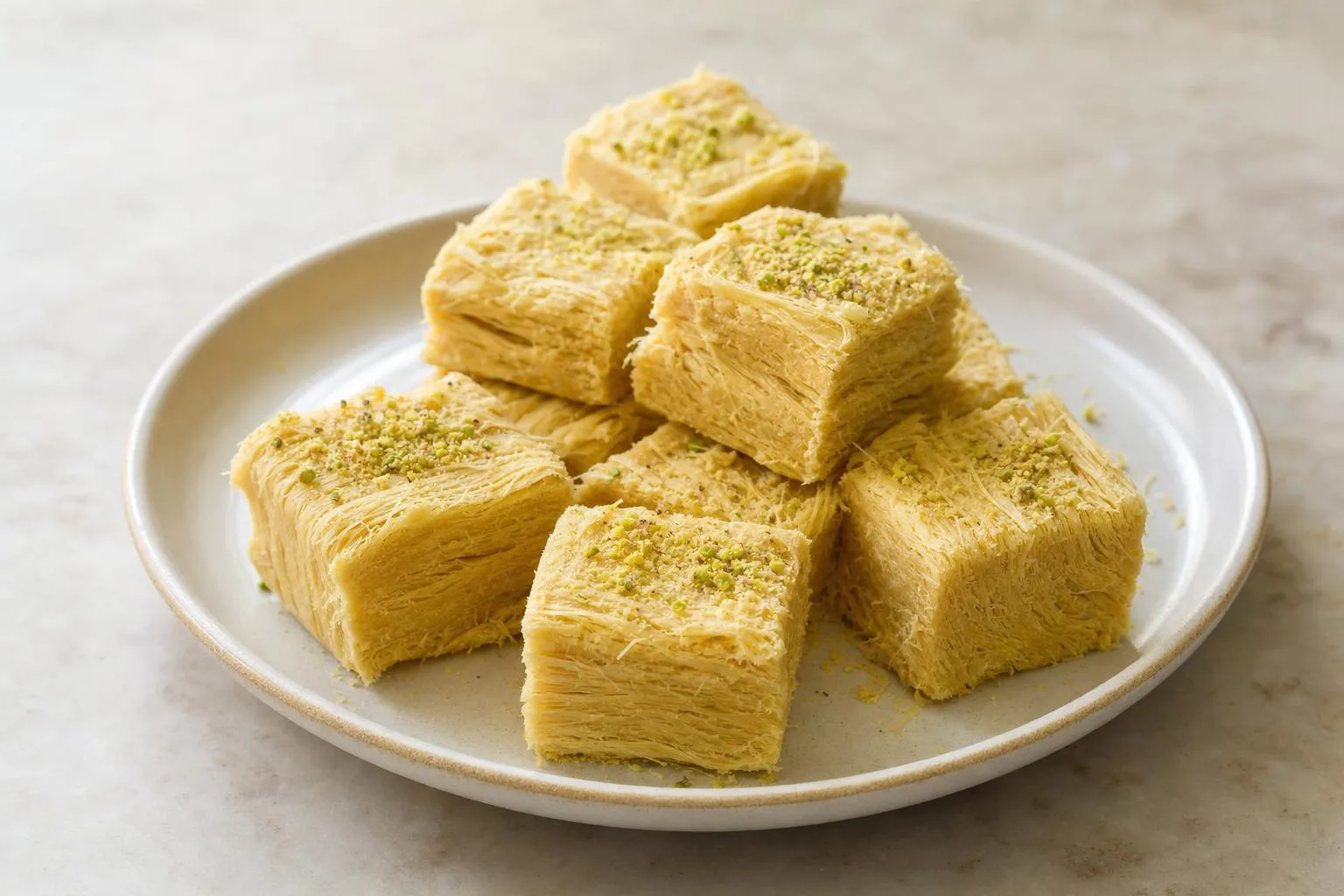
Soan Papdi at Home (Flaky Layered Mithai)
A homemade version of the tin-box classic, built on pulled sugar threads and a gram-and-chickpea flour dough.