
Soan Papdi at Home (Flaky Layered Mithai)
A homemade version of the tin-box classic, built on pulled sugar threads and a gram-and-chickpea flour dough.
Soan papdi at home means roasting besan and maida in ghee until nutty, boiling sugar syrup to a single fine thread, mixing the two fast, then pulling the warm dough by hand into thin layers before pressing it flat and cutting it into squares. The entire shape of the sweet — flaky, not fudgy — comes down to catching that syrup at exactly one-string stage; under or over that point and the layers won't form.
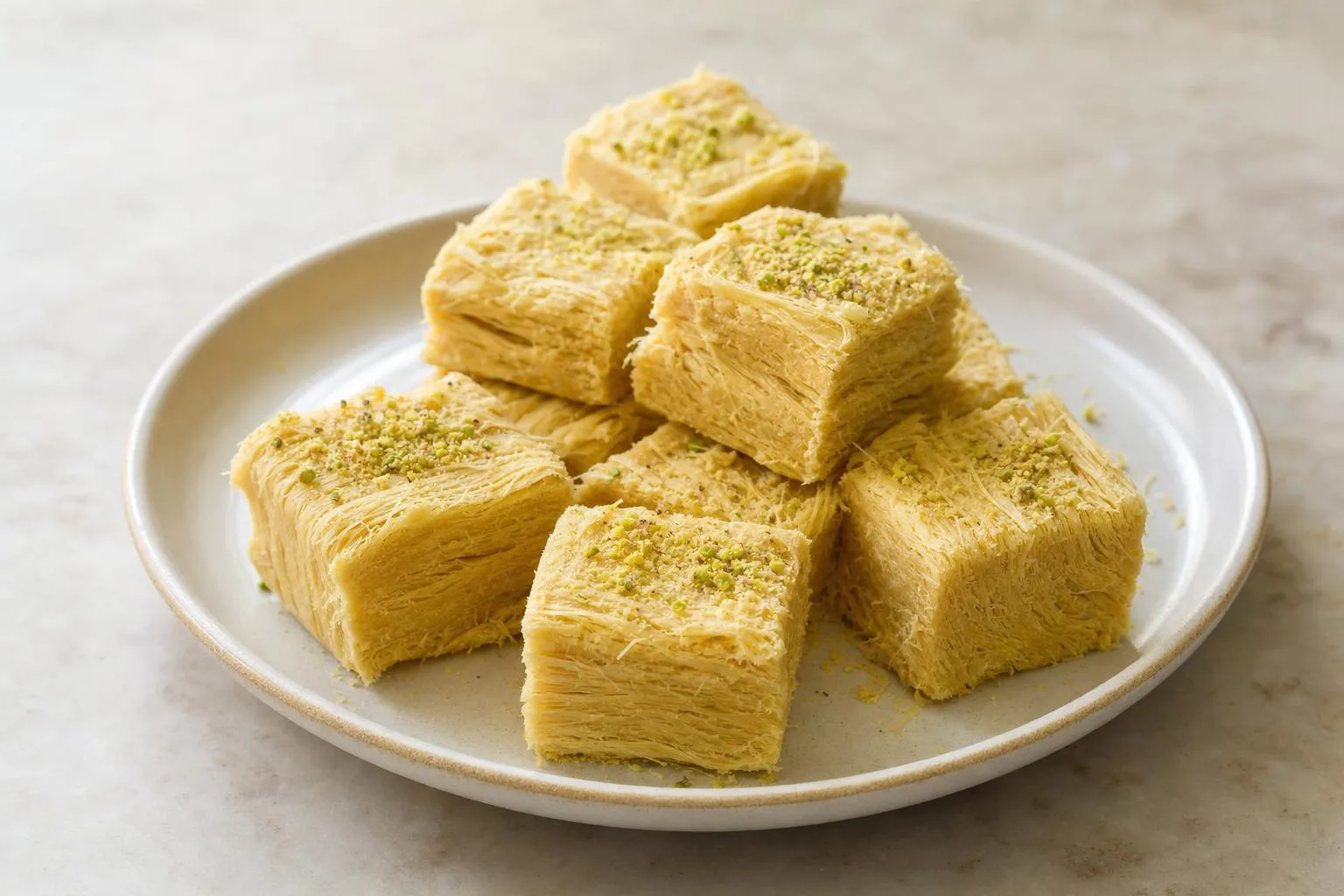
Soan papdi is the sweet most people in the diaspora only know from the gold tin at Diwali, the one with the impossibly thin, shredded-looking layers that seem to dissolve the second they hit your tongue. Making it at home is a different experience entirely from eating it out of a box. It asks you to roast flour until it smells right, boil sugar to a very specific stage, and then physically pull the hot mixture into threads with your own hands before it sets.
This is not a fudge like besan barfi or a press-into-a-tin sweet like mohanthal. The texture comes entirely from mechanical work on hot sugar, closer in spirit to the syrup-pulling you’d do for certain South Indian sweets than to anything you whisk or simmer. If you’ve made kaju katli and gotten comfortable judging syrup by eye rather than a thermometer, that instinct transfers directly here.
How to tell the syrup is ready
The one-string test is the whole recipe. Boil your sugar and water, then start testing with wet fingers after about four minutes. Pinch a drop between your thumb and finger, then pull apart slowly. You’re looking for a single thin thread that holds for a second before snapping — not a blob that refuses to stretch, and not sugar that’s gone past amber and smells faintly burnt.
If it breaks into little beads, it hasn’t cooked long enough. Give it another 30-60 seconds and test again. If it won’t form a thread at all and looks grainy and dull, it’s seized — usually from a stray grain of undissolved sugar touching the pan wall, or stirring too much early on. The fix is a splash of hot water stirred in, then bringing it back to a boil and retesting from scratch. It costs you a little syrup volume and a few minutes, but it saves the batch.
Ingredients
Tap an ingredient to cross it off as you go.
Instructions
- Heat the ghee in a heavy pan on low. Add the sifted besan and maida together. Roast on low heat, stirring constantly, for 12-15 minutes.
- Keep going until the mixture turns a shade darker, smells nutty and toasted, and loosens into a grainy, pourable paste. It should not smell raw or taste chalky.
- Meanwhile, make the syrup. Put sugar, water and cream of tartar in a separate small pan. Boil on medium heat without stirring once it starts bubbling.
- Test the syrup often after the 4-minute mark. Dip two fingers in cold water, pinch a drop of syrup, then pull your fingers apart gently. You want a single fine thread that holds for a second or two before breaking — that's one-string consistency.
- Pour the hot syrup into the roasted flour paste immediately. Stir hard and fast with a wooden spoon until it comes together into a smooth, slightly stretchy mass. Work quickly; it stiffens as it cools.
- While still warm enough to handle but cool enough not to burn your hands, grease your palms with ghee. Take a portion of the dough and pull it between both hands, folding it over itself, again and again, for 3-4 minutes. You're building layers — the dough will turn pale, matte and faintly flaky as the threads set.
- Once it holds together but still gives a little, pat it into a rectangle about 1-inch thick on a greased tray. Sprinkle the cardamom-pistachio mix over the top and press very lightly so it stays put without crushing the layers.
- Cut into 1.5-inch squares with a sharp, dry knife while still slightly warm. Let the pieces cool fully and firm up before lifting them, about 20 minutes, then store in an airtight tin.
Ingredient guides: Besan (Gram Flour): Coarse vs Fine, and How to Roast It
Ingredient swaps for cooks abroad
- No cream of tartar: use 1/2 tsp lemon juice or a few drops of vinegar in the syrup instead — both do the same job of stopping stray crystals.
- No edible camphor (kapur): leave it out entirely. It's a traditional flavour note, not a structural ingredient, and the sweet works fine without it.
- Maida unavailable or avoiding it: substitute with an equal amount of besan, though the dough will be slightly less crisp and a touch more crumbly.
- Ghee instead of neutral oil is not optional here — the flavour and the way the dough layers both depend on it, so don't swap this one.
Frequently asked questions
- My dough won't pull into threads, it just breaks apart — what went wrong?
- This usually means the syrup was overcooked past one-string stage and crystallised when it hit the roasted flour, or the dough cooled too much before you started pulling. Work the dough while it's still warm and pliable, and if it's already crumbly and dry, there's no fixing that batch — note the syrup stage for next time and start again.
- Can I make soan papdi without pulling it by hand?
- The hand-pulling is what creates the flaky layers, so skipping it gives you a dense, fudgy block instead of the characteristic shredded texture. If pulling hot sugar by hand feels risky, wear thin cotton gloves under a layer of ghee, or use two flat spatulas to fold and stretch the dough instead — slower, but safer.
- What's the difference between soan papdi and besan barfi?
- Besan barfi is a dense, fudgy sweet made by cooking roasted gram flour with sugar syrup until it sets solid. Soan papdi uses the same roasted-flour base but the hot syrup is pulled into fine threads by hand, which creates the airy, flaky layers — a completely different texture from the same starting ingredients.
- How far ahead can I make this, and how should I store it?
- Soan papdi keeps well in an airtight tin at room temperature for about a week, though the layers soften slightly with humidity, so avoid the fridge. Keep it away from any moisture — a damp spoon or a humid kitchen counter will turn the flaky texture gummy within a day.
- Is it normal for the layers to flatten or stick together after cutting?
- Some settling is normal, especially in a warm or humid kitchen, and the top layers may compress slightly under their own weight. To keep pieces distinct, store them in a single layer rather than stacked, and add a small sheet of parchment between layers if you do need to stack the tin.
More barfi & fudge
View all →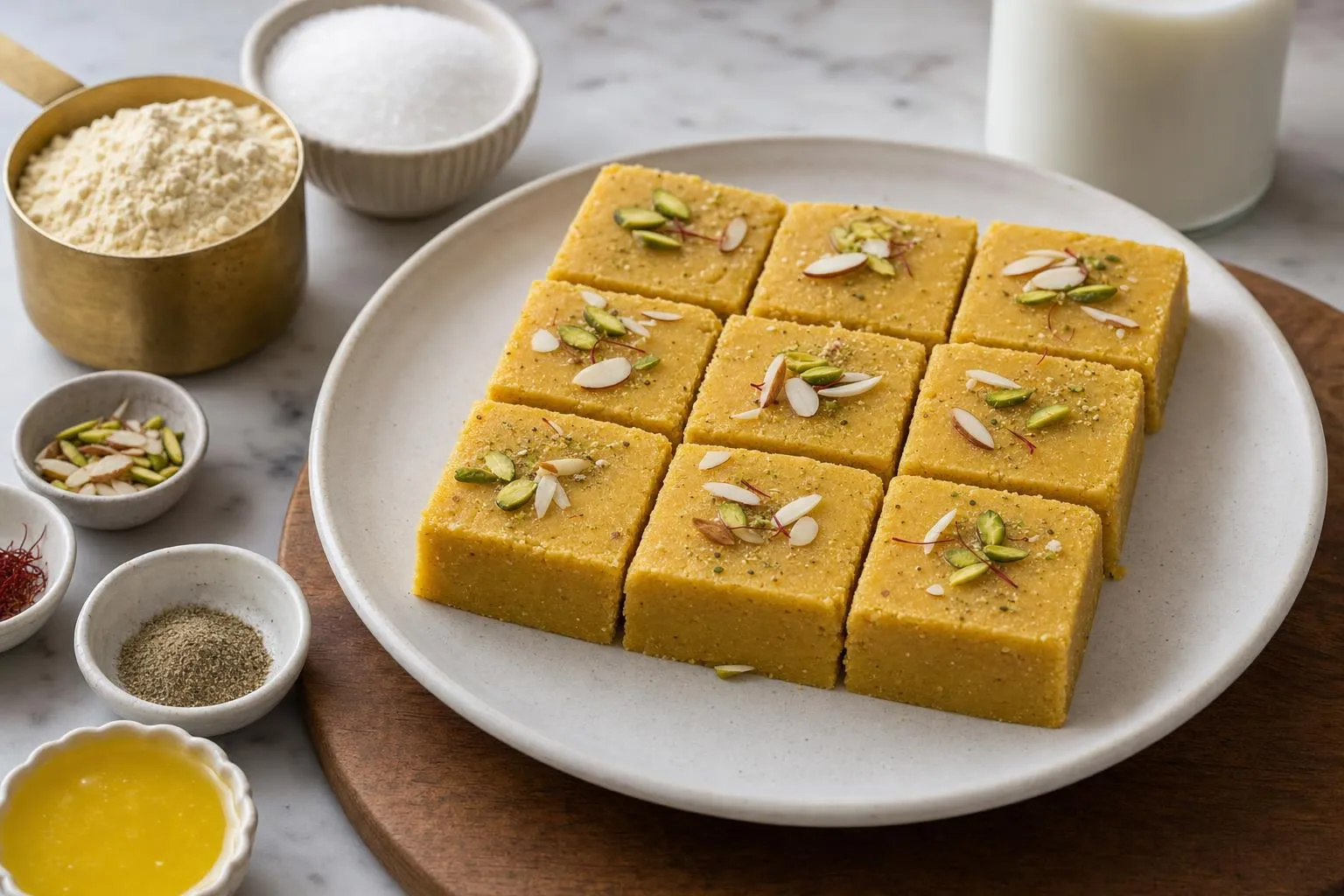 50 min
Besan Barfi (Fudgy Gram Flour Barfi)
A dense, fudgy besan barfi that depends on roasting the gram flour to a deep amber shade before it meets the sugar.
 45 min
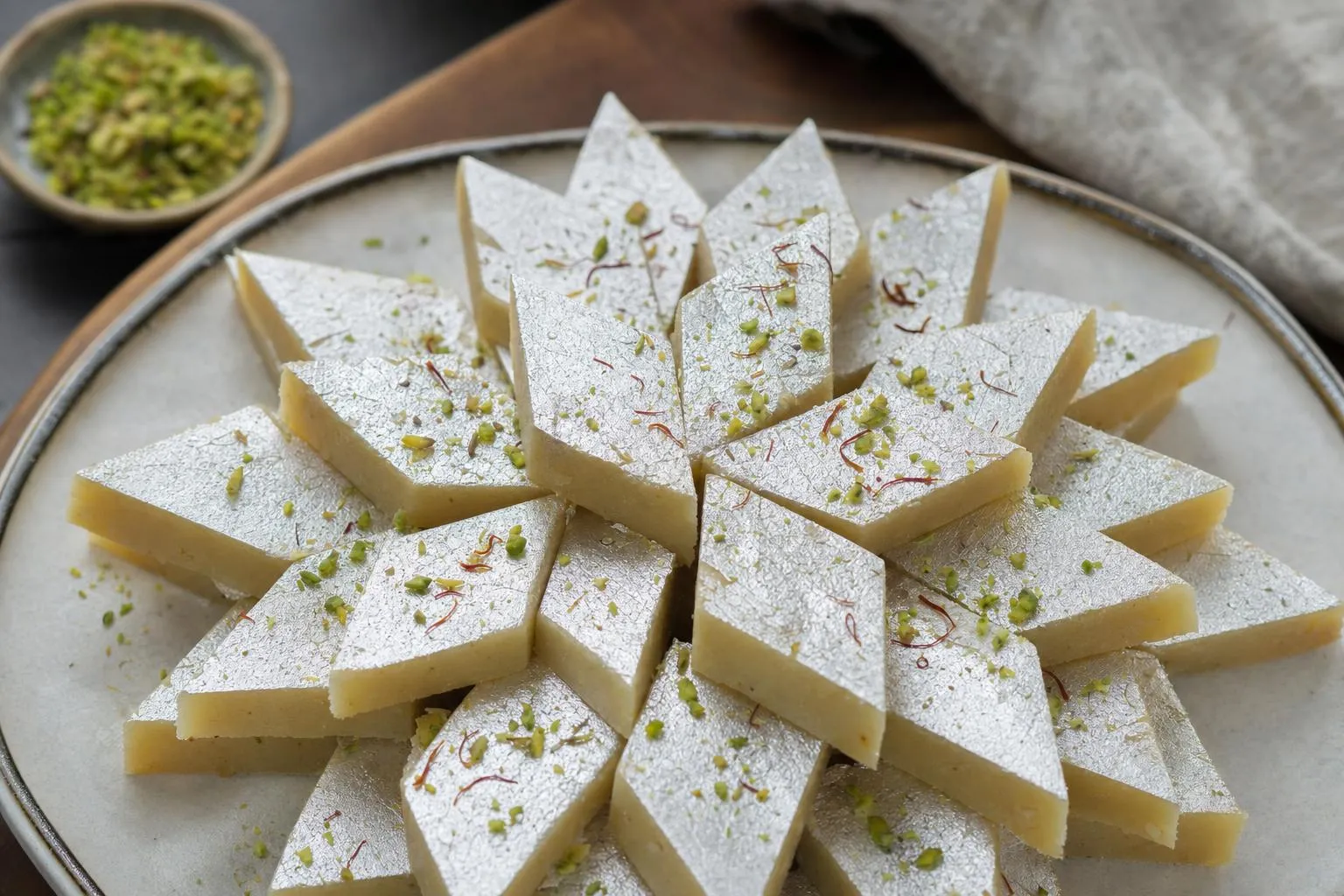
Kaju Katli (Cashew Barfi) Without a Candy Thermometer
Thin, diamond-cut cashew fudge made with just cashews and sugar syrup, cooked to the classic one-string stage by eye and feel.
 55 min
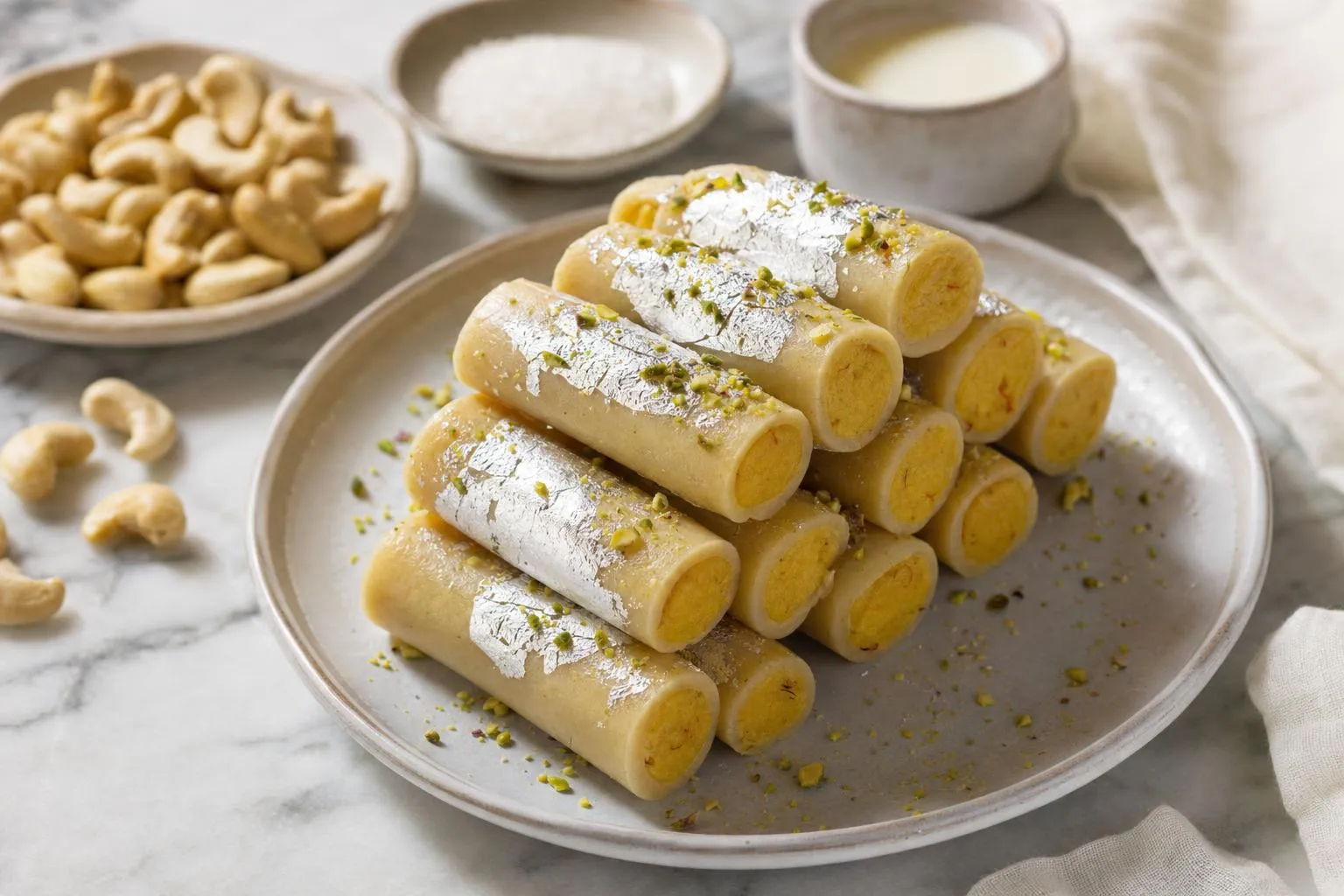
Kaju Roll (Cashew Rolls with Kesar Filling)
Thin sheets of cashew katli dough rolled around a saffron-cardamom filling, sliced into neat pinwheels.