
Khoya (Mawa)
Milk cooked down to a solid — the base of most Indian sweets, and the one ingredient a kitchen outside India usually cannot get.
Khoya is whole milk simmered until nearly all its water has gone, leaving a dense, faintly caramelised solid — roughly a litre of milk down to 200g. It is the backbone of barfi, peda, gulab jamun and most milk sweets. Outside India it is sold frozen at South Asian grocers, and the usual stand-ins are full-fat milk powder or whole-milk ricotta, each of which changes the result in a specific way rather than replacing it outright.
Also sold as mawakhoamava
Khoya is what happens when you boil whole milk for long enough that almost nothing is left but the solids. No sugar, no rennet, no culture — just milk, heat and an hour of stirring. A litre reduces to roughly 200 grams.
That reduction is the point. Removing the water concentrates the fat and the milk proteins, and the long contact with the pan browns them slightly, the way butter browns. What comes out is dense, faintly sweet without any sugar in it, and carries a cooked, caramelised note that fresh dairy does not have. Set a block of it beside a glass of milk and they do not taste related.
English has no word of its own for it. It gets translated as reduced milk or dried milk solids, and mawa is not the English name but a second Indian one for the same thing. It is also not condensed milk, which has sugar in it and stays liquid; khoya has none and ends up solid.
Most Indian sweets are built on it. Barfi is khoya and sugar. Peda is khoya worked smooth. Gulab jamun dough is khoya with a little flour. Kalakand is khoya caught at a grainy stage on purpose. If you have wondered why mithai tastes like nothing in a Western dessert repertoire, this is largely why: there is no equivalent ingredient in it.
The ingredient this site is organised around not having
It is worth being plain about something. Of the recipes here, only two list khoya at all — gajar ka halwa and mohanthal — and both only as an optional enrichment, with milk powder named as the alternative. Every other one is a route around it.
That is not an accident of what has been written so far. It is what cooking mithai outside India mostly consists of. Gulab jamun is built on full-fat milk powder because khoya is not in a British supermarket. Gajar ka halwa leans on evaporated milk, which is the same trick a factory does. Coconut ladoo uses condensed milk, which is khoya’s logic plus sugar. Kaju katli and khajur barfi sidestep dairy solids entirely, which is precisely why they are the easiest barfis to make abroad.
So the practical question is rarely “where do I buy khoya”. It is “what am I giving up by not using it”, and the answer differs by substitute.
The three grades
Indian sweet shops do not treat khoya as one thing. If your grocer labels it, you will see three:
Batti is the hard grade, firm enough to grate. It holds an edge when cut, which is what barfi and peda need.
Chikna is smooth and softer, with more moisture left in. It is what gulab jamun dough wants, because it needs to stay pliable rather than set.
Danedar is deliberately granular — curdled slightly as it reduces, usually with a few drops of acid. That grain is the texture of kalakand, and using a smooth khoya there gives you something that tastes right and feels wrong.
Most blocks sold frozen outside India are unlabelled and sit closest to batti. That is fine for barfi and workable for almost everything else.
What each substitute actually costs you
This is the part a swap list leaves out.
Full-fat milk powder is the closest and the most forgiving, and it is what most recipes here use. Full-fat is the operative word — the milk powder guide covers how to tell, and why the tin on a supermarket shelf is usually the wrong one. It rehydrates into something structurally very similar — enough fat, enough protein, very little water. What it does not carry is the browning. Khoya has spent an hour in contact with a hot pan; milk powder has been spray-dried. The result is a shade cleaner and less caramelised, which matters more in a sweet where khoya is the only flavour, like peda, than in one where cardamom and ghee are doing the talking. Use full-fat. Skimmed or instant lacks the fat and tastes chalky.
Whole-milk ricotta goes the other way. Roughly a cup of well-drained ricotta plus two tablespoons of milk powder stands in for a cup of khoya, cooked down until it tightens. The texture gets very close. The flavour lands adjacent rather than on top — ricotta carries a faint lactic tang and more moisture, so the sweet reads fresher and less cooked. For rasmalai and the softer Bengali sweets that is arguably an improvement. For barfi it is a compromise.
Condensed milk is khoya with the sugar already in it, which makes it excellent and inflexible. It is a genuine shortcut where the recipe wanted sweetness anyway, and useless where you needed to control the sugar separately.
Evaporated milk is the same idea at a lower concentration — about 60% of the water removed rather than nearly all of it. It cannot stand in for a solid, but it saves most of the reduction time in anything cooked wet, which is exactly how the carrot halwa here uses it.
Buying it outside India
Frozen blocks are the real thing and the best option if you have a South Asian grocer with a freezer. Nanak and Deep are the brands most widely stocked in the US and Canada; UK shops more often carry unbranded blocks. Buy it frozen rather than chilled — it is a fresh dairy product with a short refrigerated life and no preservatives.
Watch the powder. A great deal of what sells online as mawa powder or khoya powder is milk powder, occasionally with vegetable fat added. It is a perfectly good substitute and the recipes here assume it. It is not khoya, and a recipe written for a block will not behave if you swap it in one for one. The ingredients panel will tell you in two seconds; the product name will not.
Nothing in a mainstream supermarket is khoya. Paneer is not khoya — it is curdled, not reduced, and has had its whey drained. Ricotta is not khoya either, though it is the closest thing on that shelf.
Making it at home
Two routes, depending on how much time you are willing to lose.
The honest one is a litre of whole milk in a wide, heavy pan over medium-low heat, stirred more or less continuously for an hour or more until it pulls together into a mass that leaves the sides. Wide pan, not deep — the surface area is doing the work. It is genuinely tedious and genuinely better than anything else on this page.
The fast one is milk powder, a splash of whole milk or cream, and a spoon of ghee, warmed together until they come together into a dough — a few minutes in a pan or in the microwave in short bursts, stirring between. It is reconstituted milk powder rather than reduced milk, with the limits described above, but it takes four minutes and works.
Neither keeps the way a shop block does. Use it the same day.
Frequently asked questions
- What is khoya called in English?
- There is no everyday English word for it, because Western cooking never developed the ingredient. It is usually translated as reduced milk or dried milk solids. Both describe it accurately, but neither names something you can buy off a Western supermarket shelf. Mawa, khoa and mava are not translations either: they are other Indian names and spellings for the same thing.
- Is khoya the same as condensed milk?
- No. Both are milk with water taken out, but condensed milk is sweetened and still pourable, while khoya has no sugar in it and is reduced much further, to a solid you can cut or crumble. Condensed milk can stand in for khoya where a recipe wanted the sugar anyway, as in coconut ladoo. It is the wrong choice where the recipe needs to control its sugar separately, as in barfi or in gulab jamun, whose sweetness comes from the syrup.
- Are mawa and khoya the same thing?
- Yes. They are two names for milk cooked down to a solid, and which one you hear depends mostly on the region and the shop. The distinction that actually matters is the grade, batti, chikna or danedar, not the name on the label.
- Is the mawa powder sold online actually khoya?
- Usually not. Most packets labelled mawa powder or khoya powder on Amazon and Indian grocery sites are milk powder, sometimes with added fat. They work as a khoya substitute and the recipes here are built around that, but they are not the same ingredient and will not behave like a block of khoya straight from the freezer. Read the ingredients panel rather than the front of the packet.
- How much milk does it take to make a block?
- Roughly five to one. A litre of whole milk reduces to about 200g of khoya, which is an hour or more of stirring at the stove. That ratio is the whole reason it is sold rather than made at home, and the reason concentrated substitutes exist at all.
- Which grade should I buy for barfi?
- Batti, the hard grade, if your grocer distinguishes them. It holds its shape when cut, which is what barfi needs. Chikna is softer and smoother and belongs in gulab jamun; danedar is deliberately granular and belongs in kalakand. Most freezer blocks sold abroad are unlabelled and sit closest to batti.
- Does it freeze well?
- Yes, and that is how it is almost always sold outside India. It keeps several months frozen and about a week in the fridge once thawed. Thaw it in the fridge rather than the microwave, which melts the fat out unevenly and leaves a greasy patch that will not mix back in.
- What does ricotta actually change?
- Ricotta brings more moisture and a faint tang that khoya does not have, so a sweet made with it reads fresher and slightly lactic rather than caramelised. Draining it well and cooking it down closes most of the gap. The texture lands very close; the flavour lands adjacent.
Where it comes up
View all →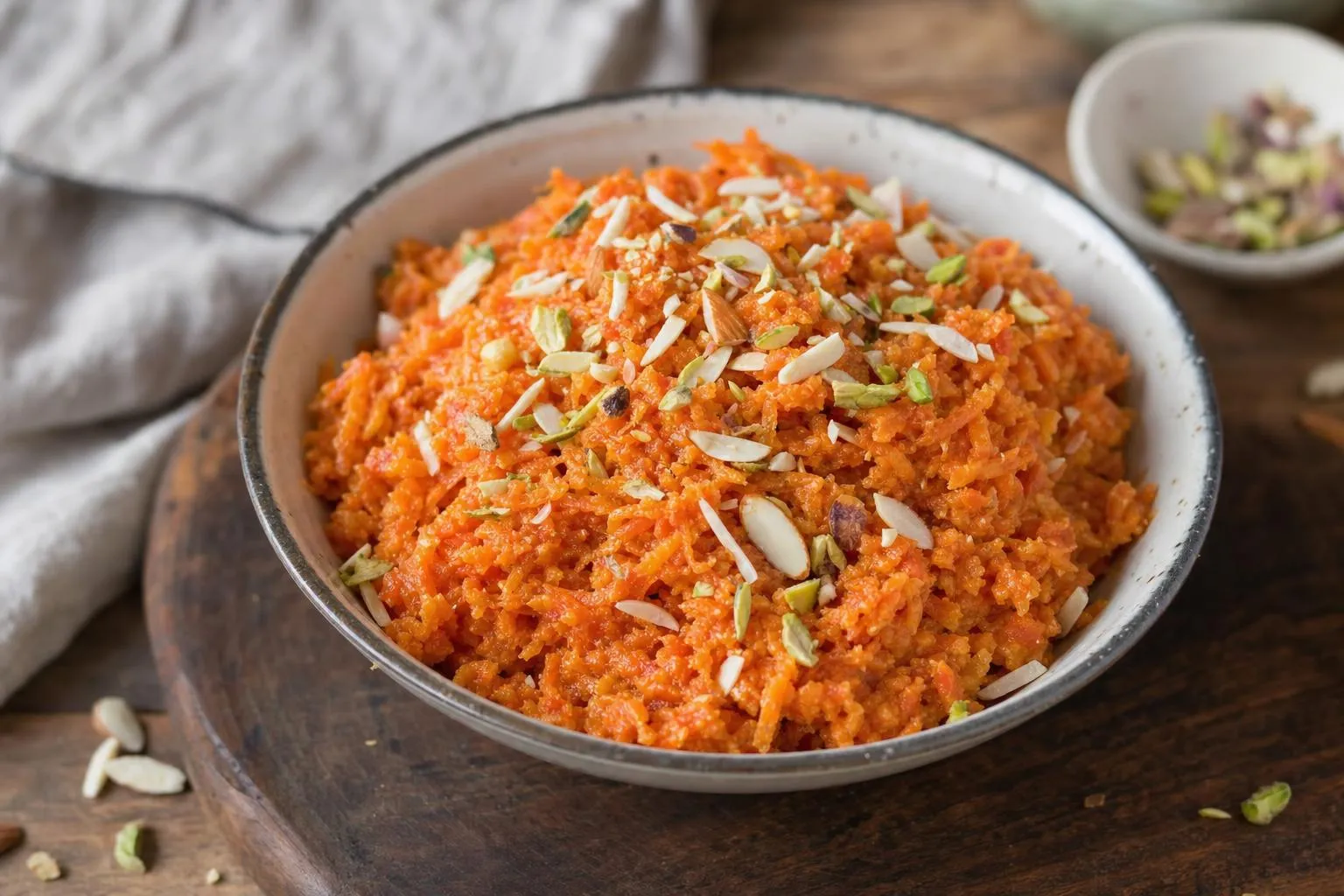 1 hr
Gajar ka Halwa (Carrot Halwa) in Under an Hour
A faster gajar halwa using bagged pre-grated carrots and evaporated milk instead of hours at the stove reducing whole milk.
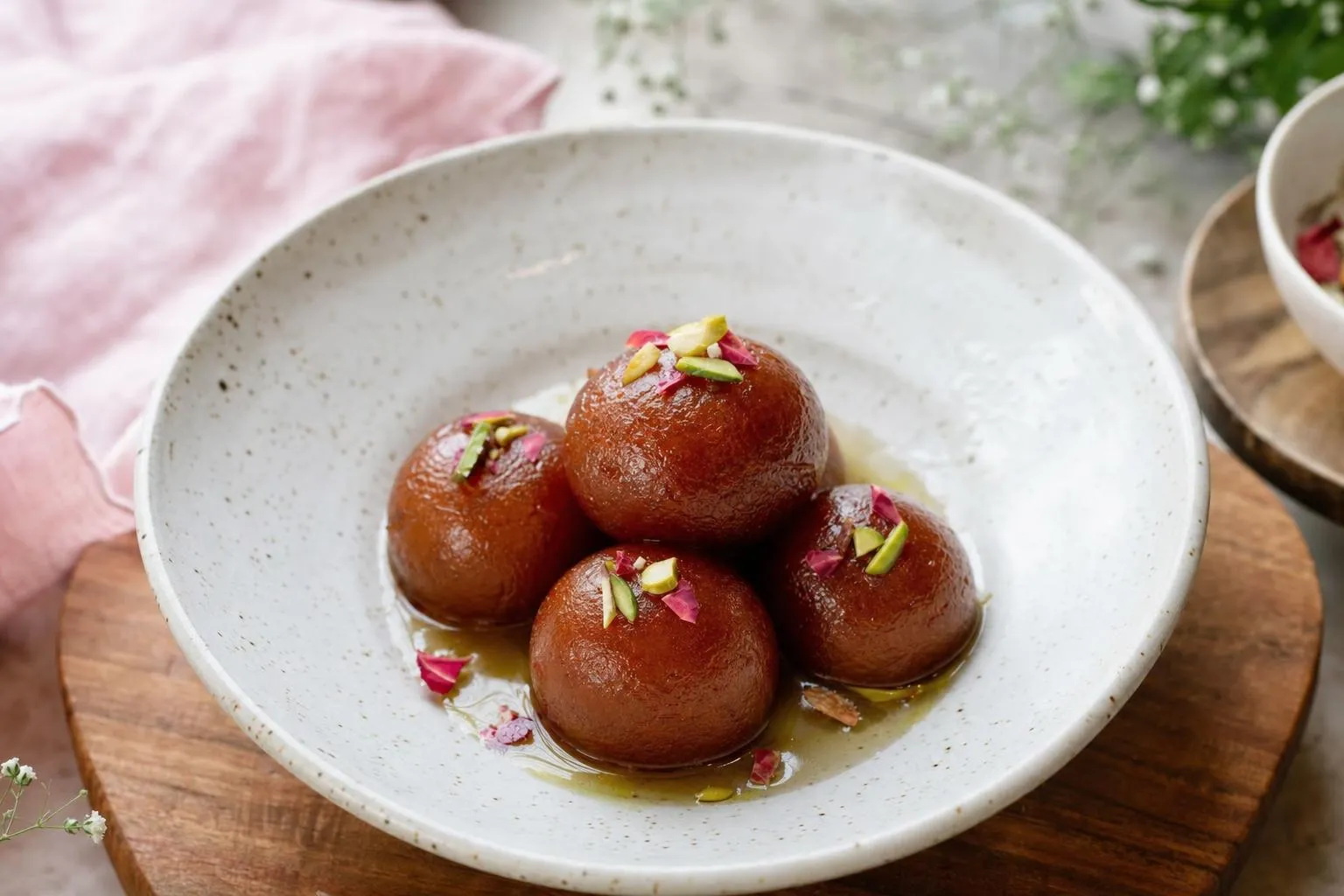 1 hr 5 min
Gulab Jamun with Milk Powder (No Khoya Needed)
A reliable milk-powder version of gulab jamun for kitchens abroad, with fixes for hard centres and jamuns that fall apart in the syrup.
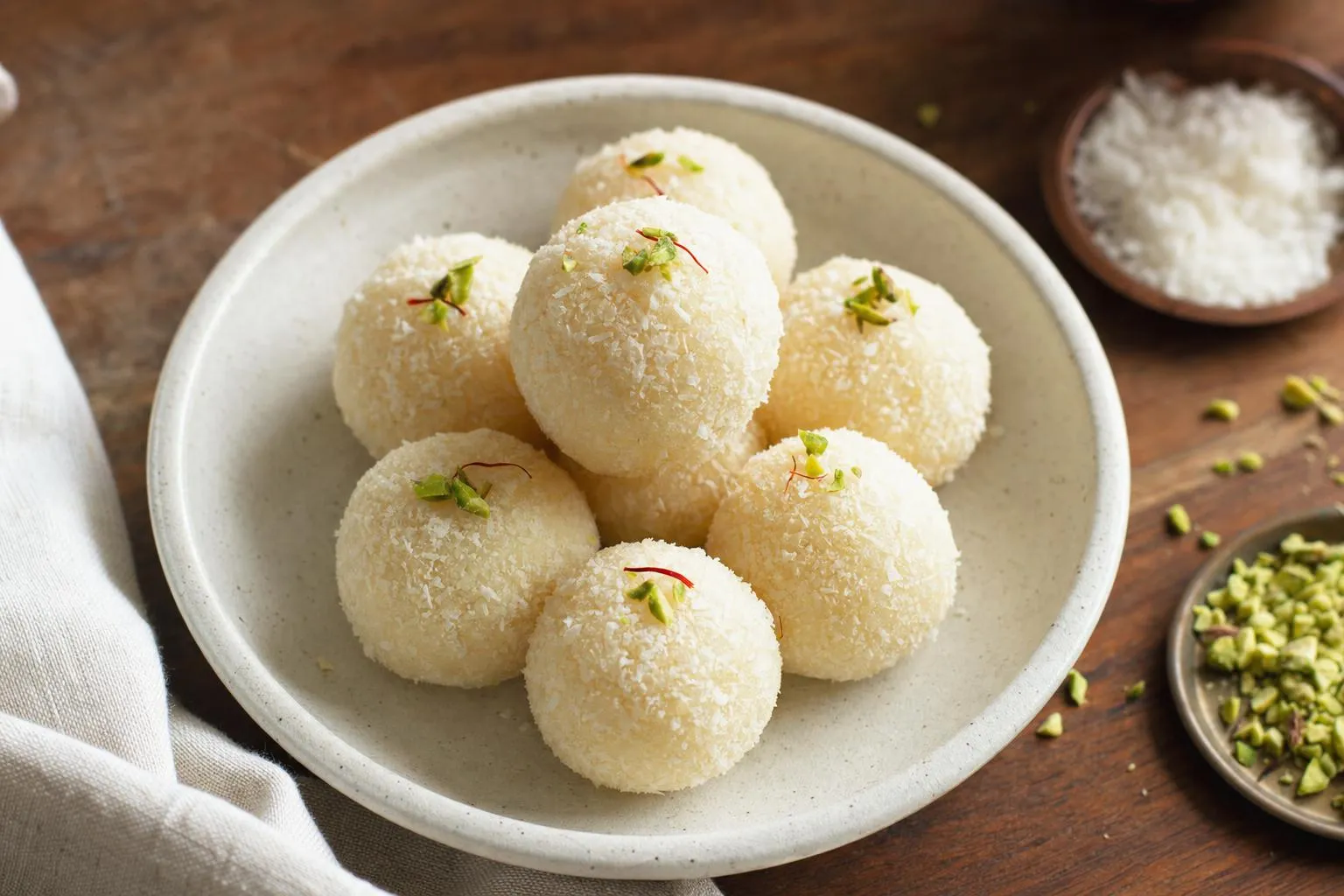 20 min
3-Ingredient Coconut Ladoo (Condensed Milk Coconut Ladoo)
A no-thermometer coconut ladoo made with condensed milk and desiccated coconut, done start to finish in about 20 minutes.
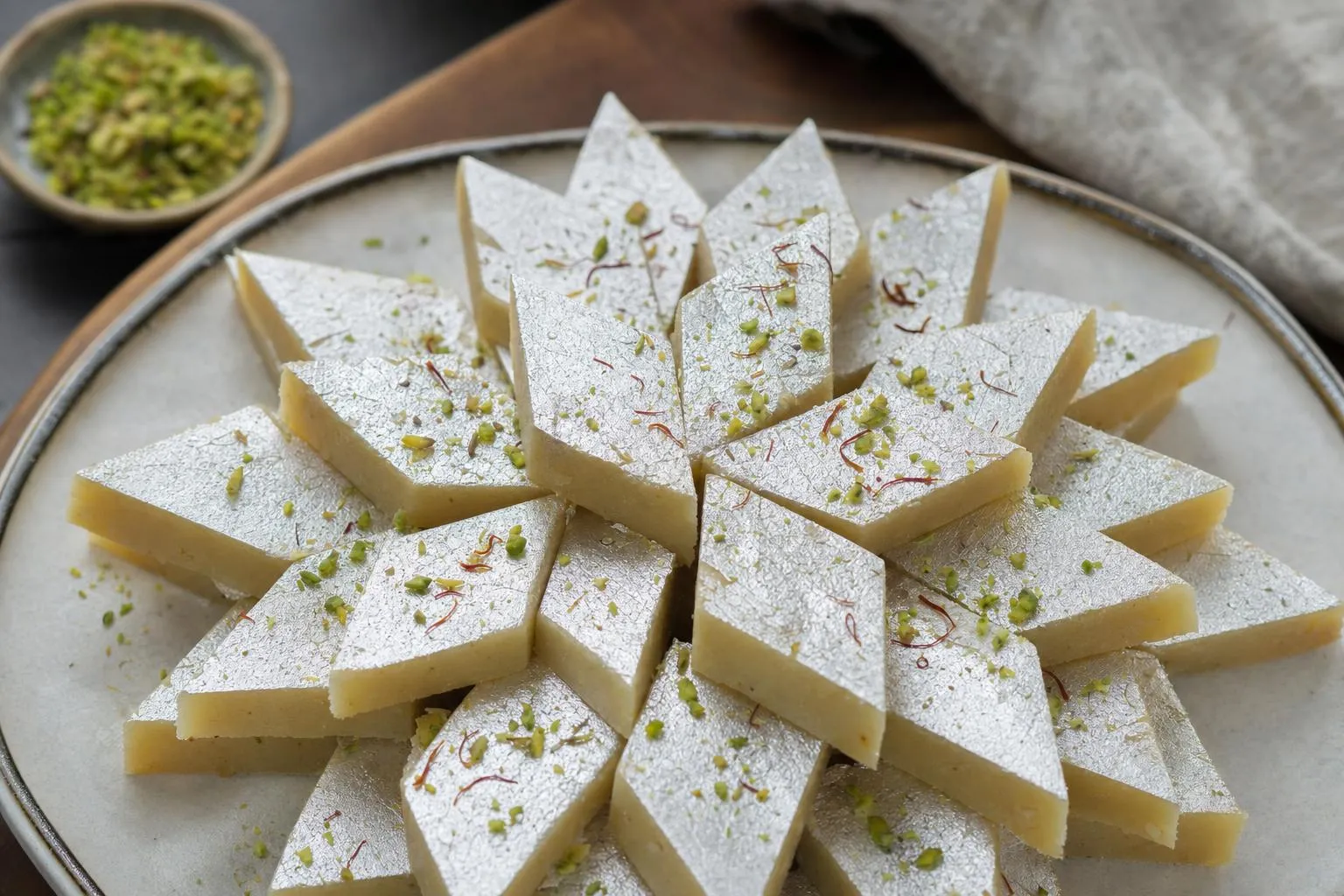 45 min
Kaju Katli (Cashew Barfi) Without a Candy Thermometer
Thin, diamond-cut cashew fudge made with just cashews and sugar syrup, cooked to the classic one-string stage by eye and feel.
 32 min
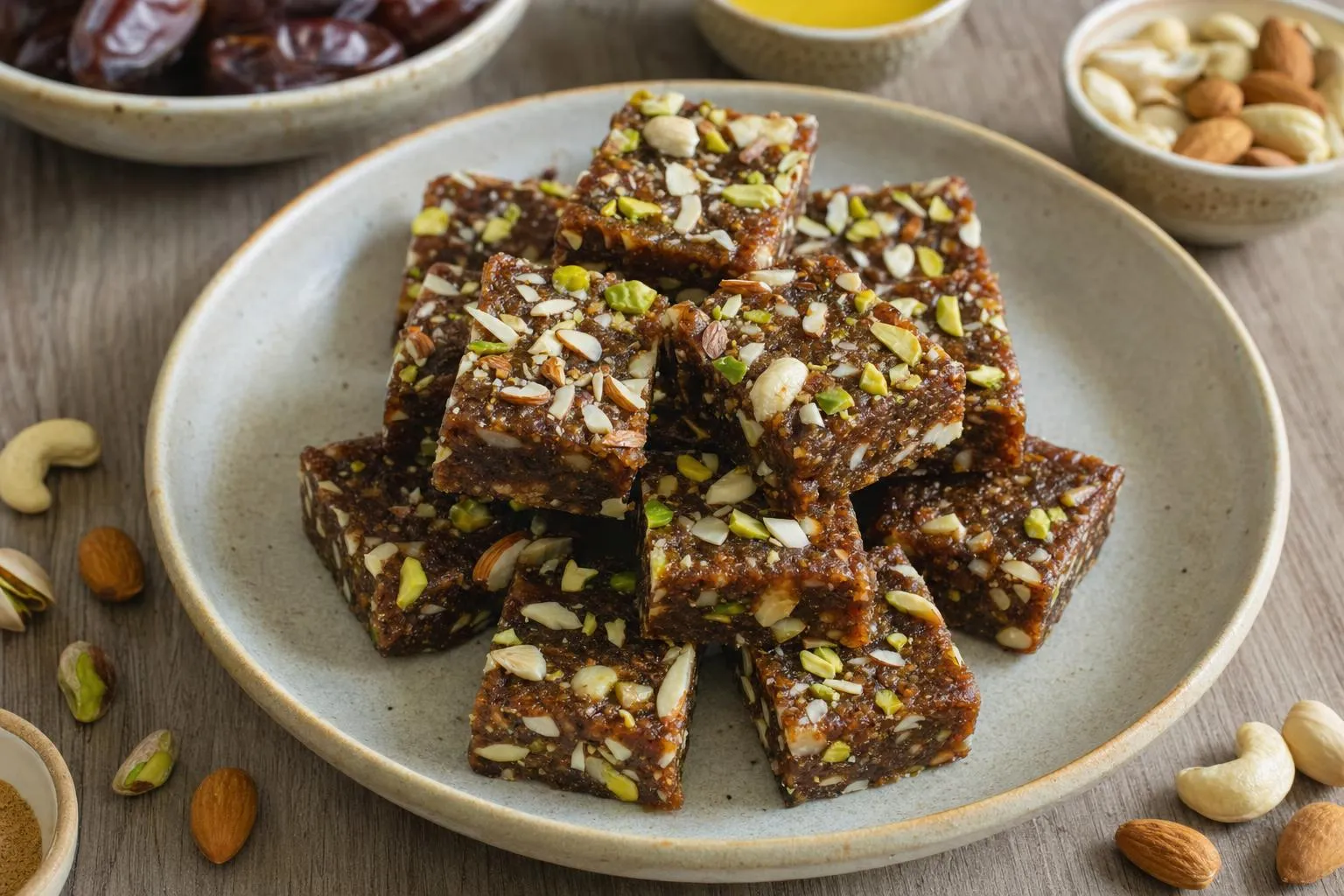
Khajur Barfi (No-Sugar Date Barfi)
A dense, chewy date-and-nut barfi that sets firm from the dates' own stickiness, with no sugar or khoya at all.
 45 min
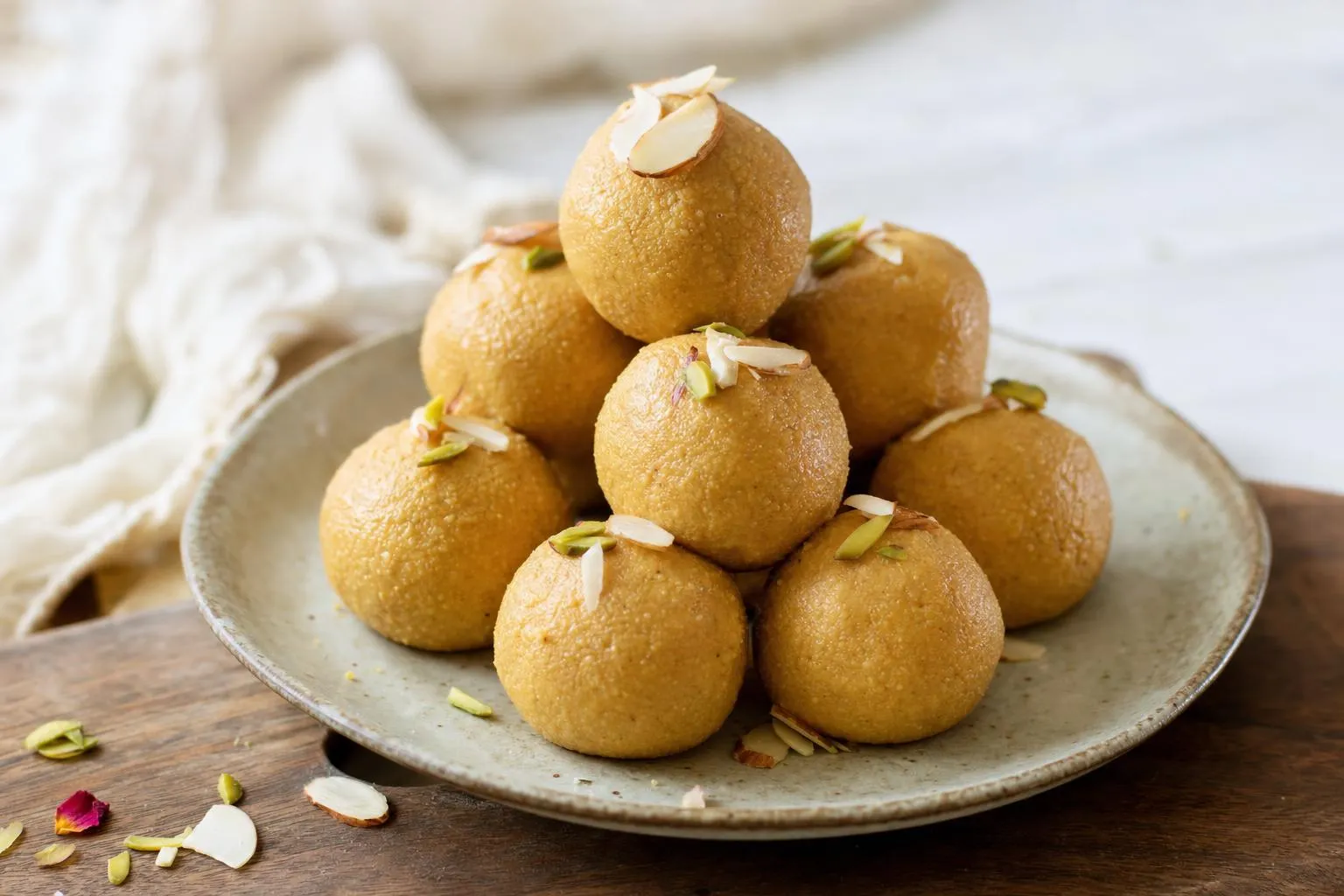
Besan Ladoo (Gram Flour Sweet Balls)
Ghee-roasted gram flour ladoo with the slow-roast technique that gets the grainy, melt-in-the-mouth texture right every time.
 1 hr 5 min
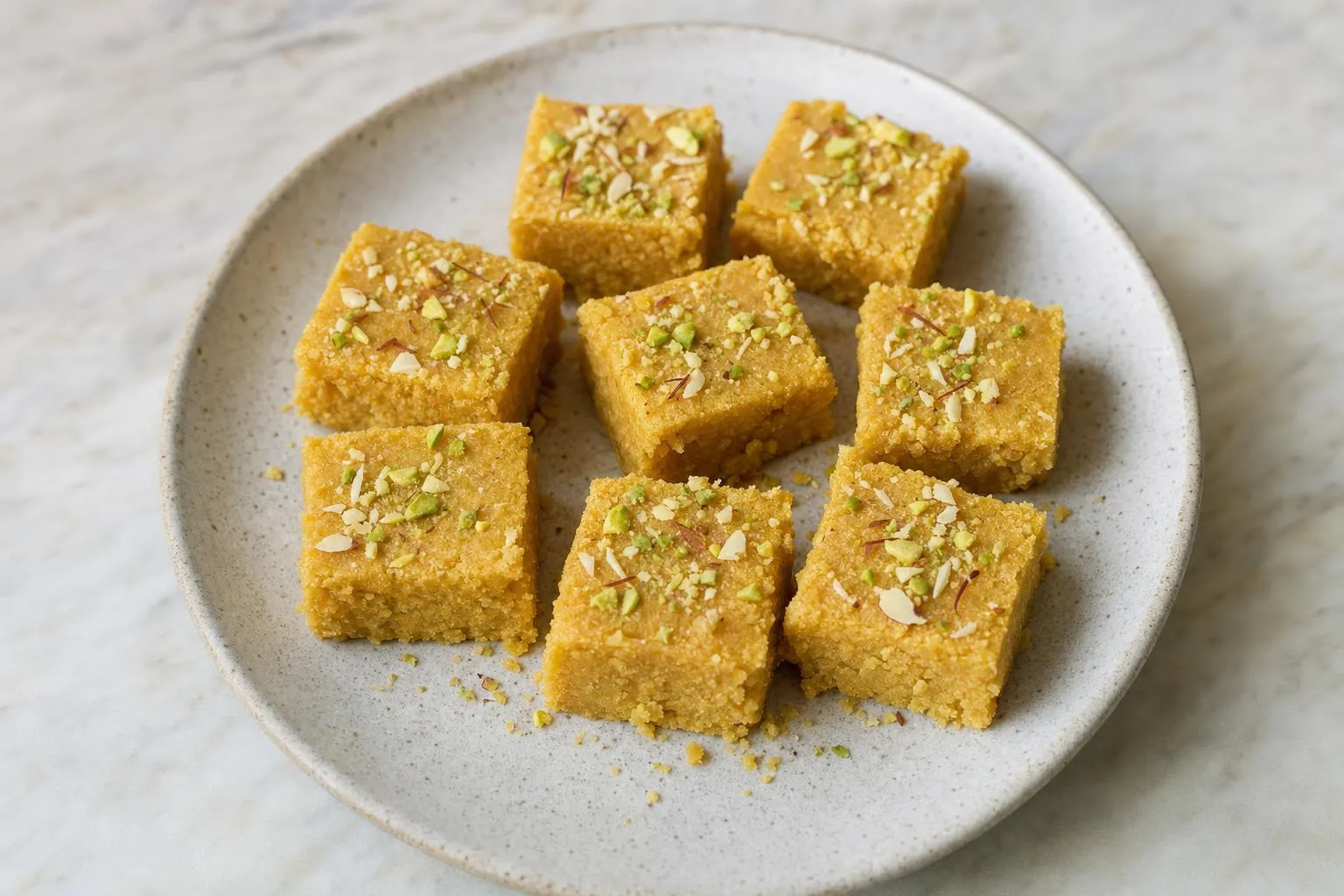
Mohanthal (Gujarati Besan Barfi)
A grainy, ghee-rich Gujarati besan barfi, with the texture built in at the dhabo stage before roasting.