
Milk Powder (Whole vs Skimmed)
The ingredient most mithai abroad actually runs on — and why the tin on the supermarket shelf is usually the wrong one.
Milk powder is milk with almost all of its water removed by spray-drying, leaving the solids as a shelf-stable powder. For mithai it stands in for khoya, and the only property that really matters is fat: whole milk powder is at least 26% fat, skimmed is 1.5% or less, and a sweet built on the skimmed kind turns out hard and chalky. In both the US and the UK the milk powder in an ordinary supermarket is usually skimmed, so check the label for the word whole before you buy.
Also sold as powdered milkdried milkdry whole milkfull-cream milk powderwhole milk powder
A litre of whole milk is roughly 87% water. Take the water away and about 130 grams of solids are left: fat, milk protein, lactose and a little mineral. Every dairy ingredient in a mithai kitchen is some arrangement of those 130 grams.
Khoya is those solids with some of the water left in, cooked slowly enough that they brown. Evaporated milk is the same milk with about 60% of its water gone. Condensed milk is evaporated milk with sugar added. Milk powder is the far end of the same line: the water sprayed off in a hot drying tower until less than five percent remains, which leaves a powder that keeps in a cupboard for months.
That is why it can stand in for khoya at all. It is the same solids with less water, which is the thing that matters. It does not have khoya’s cooked, caramelised flavour, and the khoya guide is plain about what that costs. What it does have is reliability: it is the same every time, it keeps, and it is sold in most countries on earth. For most of the recipes on this site it is the real foundation, more than khoya.
Fat is the whole story
Milk powder comes in two main kinds, and the gap between them is not a matter of degree.
Whole milk powder is at least 26% fat by weight under the international standard, and usually close to that. Fat is what makes a gulab jamun soft through the middle, what gives a barfi its short, crumbling bite, and what carries the flavour of the cardamom and ghee.
Skimmed or nonfat milk powder is 1.5% fat or less. It is mostly protein and lactose. It is fine for what it was designed for, like baking or bulking out a cup of tea, but a mithai built on it is hard, slightly squeaky and tastes of chalk. There is also a middle category, partly skimmed, which is sold less often and behaves in between.
The other word on the packet, instant, describes how the powder was dried, not what is in it. Instant powders are processed so they dissolve without clumping, and on its own that does no harm. The trouble is that in the US almost every product labelled instant is also nonfat. So when a recipe says to avoid instant milk powder, the real reason is the fat.
The supermarket trap
If you walk into an ordinary supermarket in the US or the UK and buy the milk powder on the shelf, you will very likely come home with the wrong one.
In US supermarkets the default is nonfat. Carnation Instant Nonfat Dry Milk is the tin most stores carry, and store brands follow it. Whole milk powder is there too, but usually in a different aisle: Nido Fortificada sits with the Hispanic and international foods far more often than with baking.
In the UK the familiar supermarket tin is Marvel, which is dried skimmed milk. Whole milk powder is easier to find in South Asian, African and Caribbean grocers, and in the world-foods aisle of larger supermarkets. Nido and Anchor are the names most often seen there.
At an Indian grocer, the thing to look past is dairy whitener: a tea product, usually partly skimmed and sweetened, that sits on the same shelf and looks similar. Look for whole milk powder or full cream milk powder in the name, and check the fat figure on the nutrition panel, which should be well over 20 grams per 100 grams.
The same rule as with khoya applies: the ingredients panel tells you in two seconds, and the front of the packet does not.
Working with it
Milk powder is easy to use, and the few ways it goes wrong are predictable.
It lumps. Dry powder that meets liquid before it has been broken up forms little pockets that never fully hydrate. In a jamun those become hard, gritty specks in the middle. Whisk or sift it with the other dry ingredients first, and rub the fat through before any liquid goes in. The gulab jamun recipe is built around this.
It scorches. Milk powder is concentrated protein and milk sugar, and both brown fast. Stirred into a hot pan over high heat it catches on the base within a minute. Add it over low heat, as the gajar ka halwa and mohanthal recipes do, and keep it moving until it has melted in.
It needs a moment to hydrate. A dough made with milk powder firms up slightly over the first five minutes as the powder takes up liquid. Resting it before you judge the texture saves adding flour you did not need.
Keeping it
Whole milk powder keeps for months sealed. Once opened, the fat starts to oxidise, slowly in a cool, dark cupboard and quickly in a warm kitchen or a jar left near the stove. Keep it in its sealed tin or an airtight jar, away from heat and light, and buy a size you will finish in a couple of months rather than the biggest tin on the shelf. Skimmed powder keeps longer, because there is so little fat to go stale. That is the one thing it does better.
Frequently asked questions
- Can I use skimmed or nonfat milk powder instead?
- Not where the powder is the structure of the sweet. Gulab jamun dough made with skimmed powder fries up dense and rubbery and tastes faintly chalky, because the fat it needed is not there and no amount of ghee in the syrup puts it back. Where milk powder is only a finishing enrichment — the two tablespoons stirred into gajar ka halwa or mohanthal — the difference is much smaller, and skimmed will do if it is what you have.
- Is Nido the same thing as whole milk powder?
- Nido Fortificada is: whole milk with added vitamins, iron and a little soy lecithin, which is fine for every recipe here. The toddler versions sold under the same name, such as Nido Kinder 1+, are not. They are built on nonfat milk with vegetable oils and syrup solids added, which is a formulated drink rather than plain milk powder. The packets look alike, so read the ingredients panel rather than the brand.
- Can I use the dairy whitener sold at Indian grocers?
- It is better avoided. Dairy whitener is made for tea, and most of it is partly skimmed and has sugar added, so it changes both the fat and the sweetness of a recipe in ways the quantities here do not allow for. Whole milk powder is usually on the shelf nearby.
- How do I know if an open tin has gone off?
- Smell it. Fresh whole milk powder smells of almost nothing, or faintly of cooked milk. Once the fat starts to oxidise it smells stale, like cardboard or old paint, and that flavour comes straight through in a mild sweet. Skimmed powder keeps far longer for exactly that reason: there is almost no fat to spoil.
- Can I turn milk powder into khoya?
- Into something close, in a few minutes, by warming it with a splash of milk or cream and a spoon of ghee until it comes together. The khoya guide has the method and is honest about what it misses — mainly the browning that an hour of reducing milk in a hot pan gives real khoya.
Where it comes up
View all →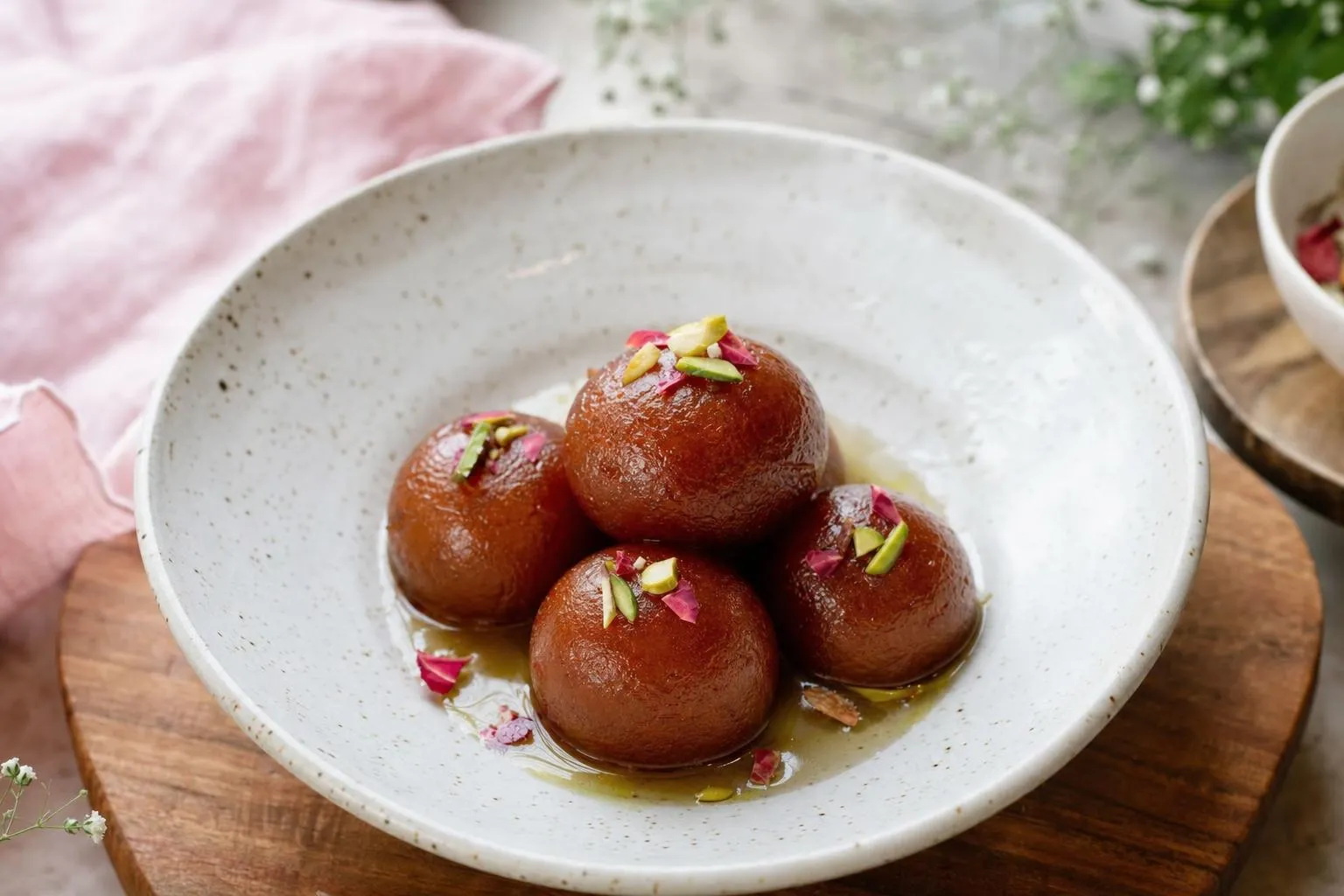 1 hr 5 min
Gulab Jamun with Milk Powder (No Khoya Needed)
A reliable milk-powder version of gulab jamun for kitchens abroad, with fixes for hard centres and jamuns that fall apart in the syrup.
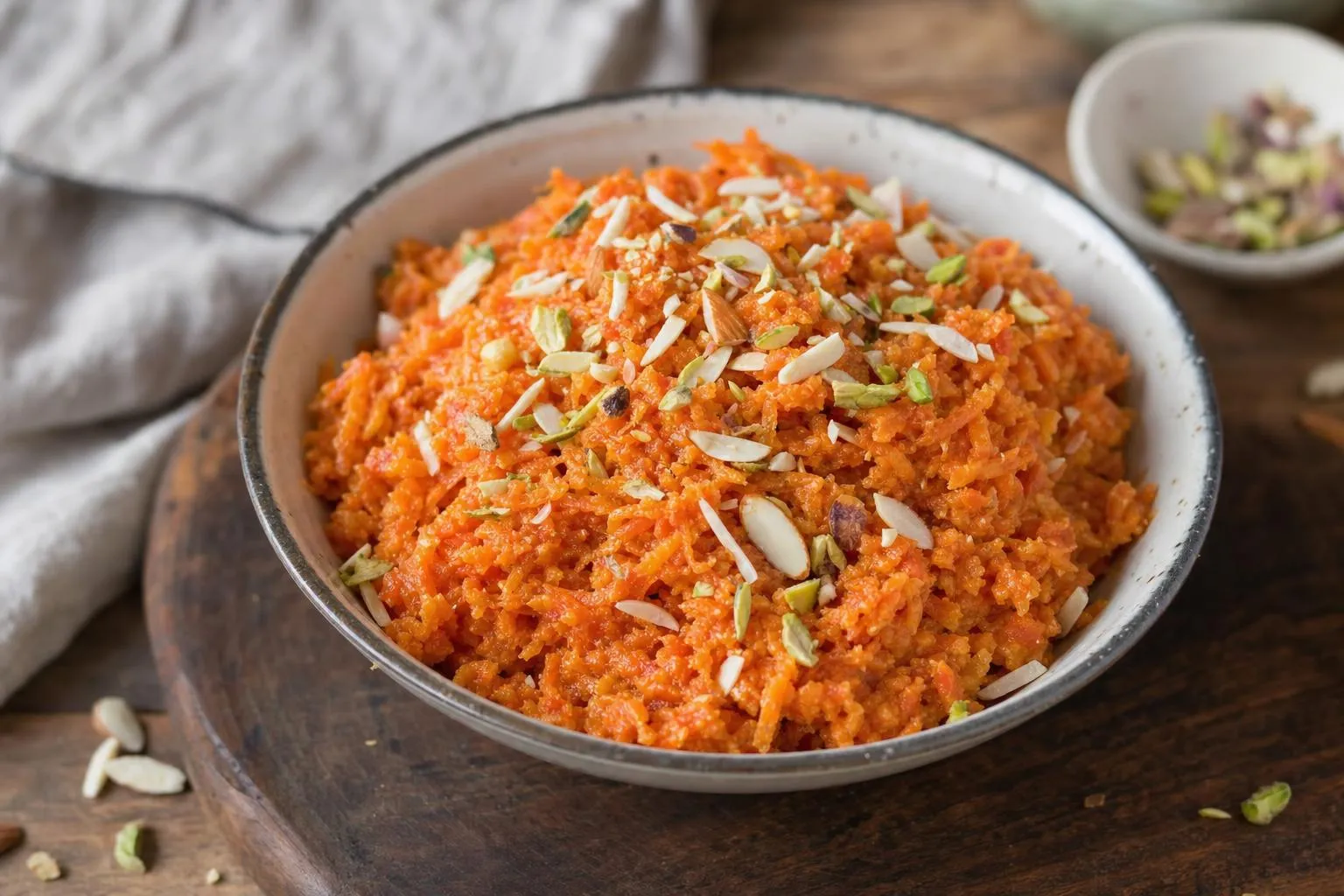 1 hr
Gajar ka Halwa (Carrot Halwa) in Under an Hour
A faster gajar halwa using bagged pre-grated carrots and evaporated milk instead of hours at the stove reducing whole milk.
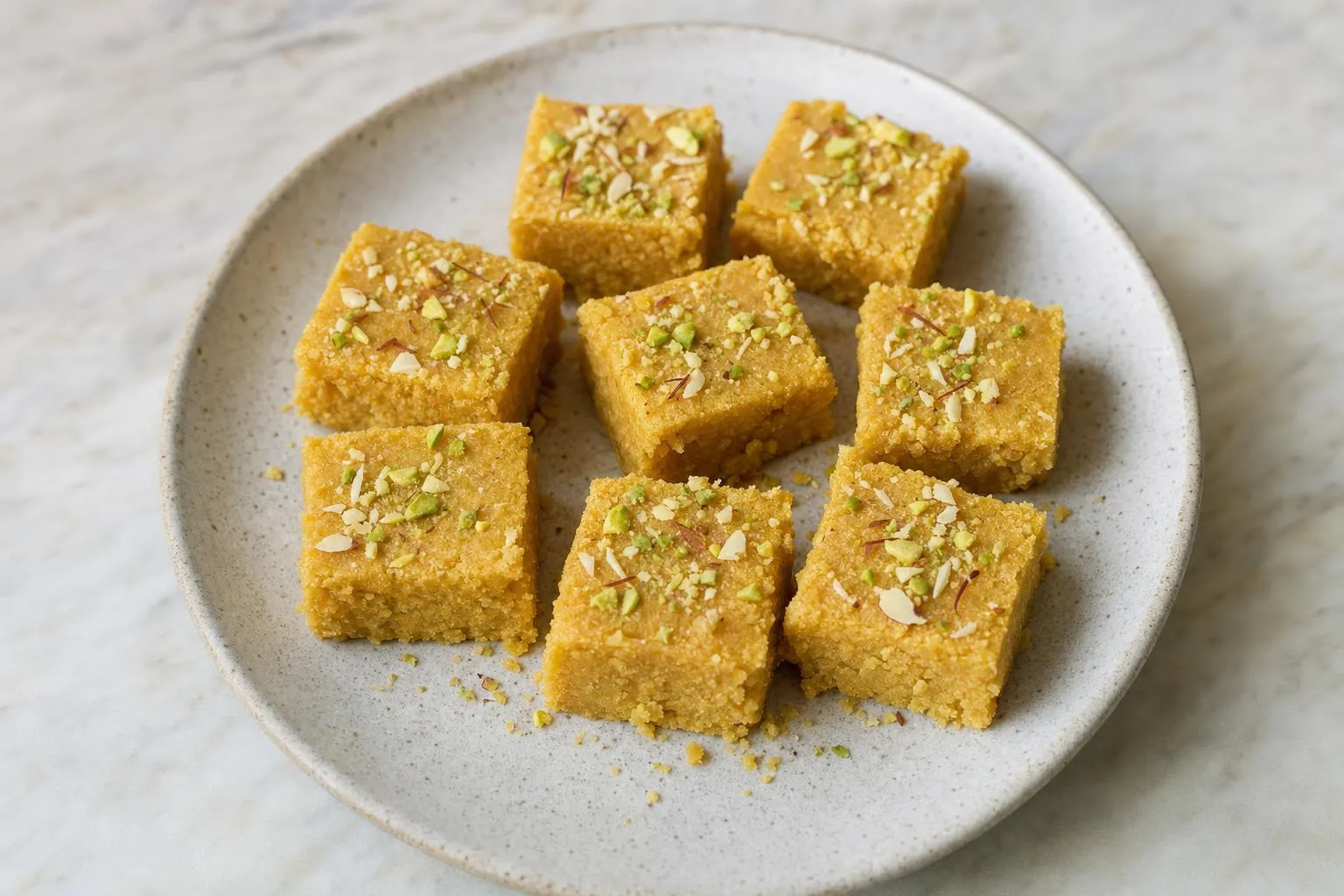 1 hr 5 min
Mohanthal (Gujarati Besan Barfi)
A grainy, ghee-rich Gujarati besan barfi, with the texture built in at the dhabo stage before roasting.