
Gajar ka Halwa (Carrot Halwa) in Under an Hour
A faster gajar halwa using bagged pre-grated carrots and evaporated milk instead of hours at the stove reducing whole milk.
Gajar ka halwa is made by cooking grated carrots down in milk with ghee, sugar, and cardamom until thick and fragrant; this version swaps hours of milk-reduction for canned evaporated milk and bagged pre-grated carrots, cutting the process to under an hour on the stove or roughly 25 minutes active time in an Instant Pot. The one thing that makes or breaks it is patience at the reduction stage — pull it off the heat too early and it tastes like sweet milky soup instead of halwa.
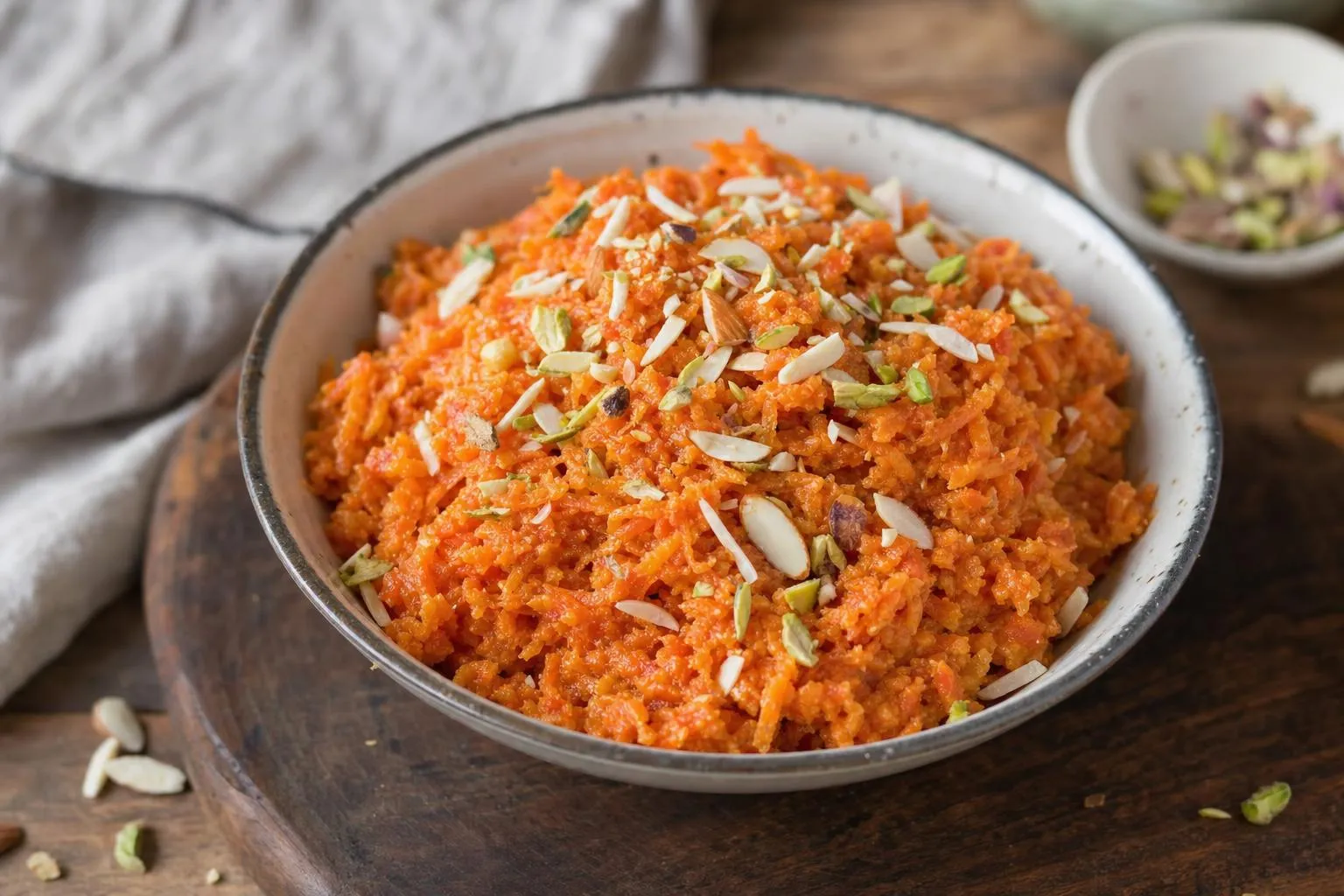
VegetarianNo wheat Contains no wheat as written. Not vegan: the evaporated milk is doing the work the long reduction would. Contains cashews or almonds.
Gajar ka halwa is a north Indian winter sweet, made when red carrots arrive in Punjab and Delhi markets in December and January. Those carrots are sweeter and less fibrous than the orange ones sold year-round in the US and UK. The traditional method simmers grated carrot in whole milk for well over an hour, until the milk reduces to something close to khoya, the dried milk solids that give old-school halwa its deep, faintly caramelised flavour.
That hour is also why many people stop making it once they leave India. This version uses canned evaporated milk, which has already had roughly 60% of its water removed. You are not faking the reduction, you are starting where an hour of stirring would have ended. Bagged pre-shredded carrots take care of the grating. The same logic, an industrially concentrated dairy product standing in for a slow reduction, is what makes gulab jamun from milk powder work.
Stovetop or Instant Pot?
Both work. The honest summary is that the stovetop version tastes marginally better, and the Instant Pot version asks less of your attention.
On the stovetop it all happens in one wide pan. Surface area drives evaporation, so a sauté pan beats a deep pot by a wide margin. You stir every few minutes for twenty to twenty-five. What you get in return is control: you can watch the colour deepen and the mixture tighten, and stop exactly where you want it.
The Instant Pot trades that control for convenience. Four minutes at high pressure softens the carrots thoroughly, but they also give up more moisture under pressure than they would in an open pan. So you finish on Sauté for another eight to ten minutes to drive it off. Active time is genuinely lower. Total elapsed time lands about the same, once you count coming up to pressure and releasing it.
Choose the stovetop if you are already in the kitchen doing something else. Choose the Instant Pot if you want to walk away in the middle of it. What does not work is covering a stovetop pan to hurry things along, because trapped steam is the exact opposite of what a reduction needs.
Ingredients
Tap an ingredient to cross it off as you go.
Instructions
- If the carrots are cut long (some bags shred them into 2-3 inch strands), run a knife through them a couple of times so they cook evenly — you don't need fine mincing, just no long strands.
- Stovetop: melt ghee in a wide, heavy-bottomed pan (kadai or a wide sauté pan works better than a narrow pot — you want surface area) over medium heat. Add carrots and stir-fry 6-8 minutes until they smell sweet and grassy-raw smell is gone, and they've dropped in volume slightly.
- Pour in the evaporated milk, stir well, and bring to a steady simmer. Cook uncovered, stirring every few minutes, for 20-25 minutes until the milk has mostly been absorbed and the mixture looks thick, glossy, and a shade darker orange, not milky-pale.
- Instant Pot: sauté carrots in ghee for 5 minutes using the Sauté function, add evaporated milk, seal, and pressure cook on High for 4 minutes with a quick release. Switch back to Sauté and simmer, stirring, until most of the liquid is gone — this takes 8-10 minutes, since the carrots release extra moisture under pressure.
- Add sugar once the mixture is thick, not before — sugar loosens everything back into liquid, so adding it early just adds 10 minutes back onto your cook time. Stir until it dissolves and the halwa pulls together again, about 4-5 minutes.
- Stir in cardamom, raisins, and chopped nuts. If using khoya or milk powder, crumble it in now and stir until it melts into the halwa rather than sitting in lumps — this takes about 2 minutes over low heat.
- Check texture: it should hold its shape loosely on a spoon, be moist but not soupy, and smell like warm cardamom and toasted ghee, not raw milk. If it still looks wet, keep it on low heat, uncovered, stirring often, until it thickens — it firms up more as it cools, so stop just before you think it's done.
- Serve warm in small bowls, garnished with a few extra nuts. It also reheats well the next day with a splash of milk stirred in.
Ingredient guides: Khoya (Mawa)Milk Powder (Whole vs Skimmed)
Ingredient swaps for cooks abroad
- Evaporated milk stands in for the traditional hours-long reduction of whole milk (khoya-making) — it already has water removed, which is the entire point of this shortcut.
- No khoya (dried whole-milk solids) available? Milk powder (like Nido or Anchor) whisked in at the end gives a similar richness and slight grain.
- Fresh carrots instead of bagged pre-grated: use 2 lbs, peeled and grated on the large holes of a box grater — Indian red carrots (gajar) if you can find them at a South Asian grocer are sweeter and less watery than standard orange carrots.
- No cardamom pods on hand? A pinch of ground cardamom from a jar works, just use less since it's more concentrated, and add it toward the end so it doesn't turn bitter with long cooking.
Frequently asked questions
- Does gajar ka halwa freeze?
- It freezes well for up to two months in an airtight container. It dries out a little in the freezer, so thaw it overnight in the fridge and reheat it on the stove with a splash of milk stirred through to bring the texture back.
- Fresh carrots instead of bagged — what changes?
- Use about 2 lbs, peeled and grated on the large holes of a box grater, and allow 15-20 minutes for the grating alone. Indian red gajar from a South Asian grocer are sweeter and less watery than standard orange carrots, so they cook down faster and taste closer to the original.
- My halwa is watery. Can I rescue it?
- Yes, and it is the easiest fault to fix. Put it back on low heat, uncovered, and stir regularly until it thickens and holds its shape on a spoon. Watery halwa almost always means it came off the heat early, or that the sugar went in before the milk had reduced.
- What can I use instead of khoya?
- Khoya is milk cooked down to a dense solid. Two tablespoons of plain milk powder whisked in at the end gives a very similar richness and slight grain. Well-drained ricotta is the other common stand-in abroad, though it reads a little softer.
- How far ahead can I make it?
- Up to five days in the fridge, and the flavour improves after a day as the cardamom settles into it. Reheat gently with a little milk — halwa firms up when cold and needs that extra liquid to come back to a spoonable texture.
You might also like
View all →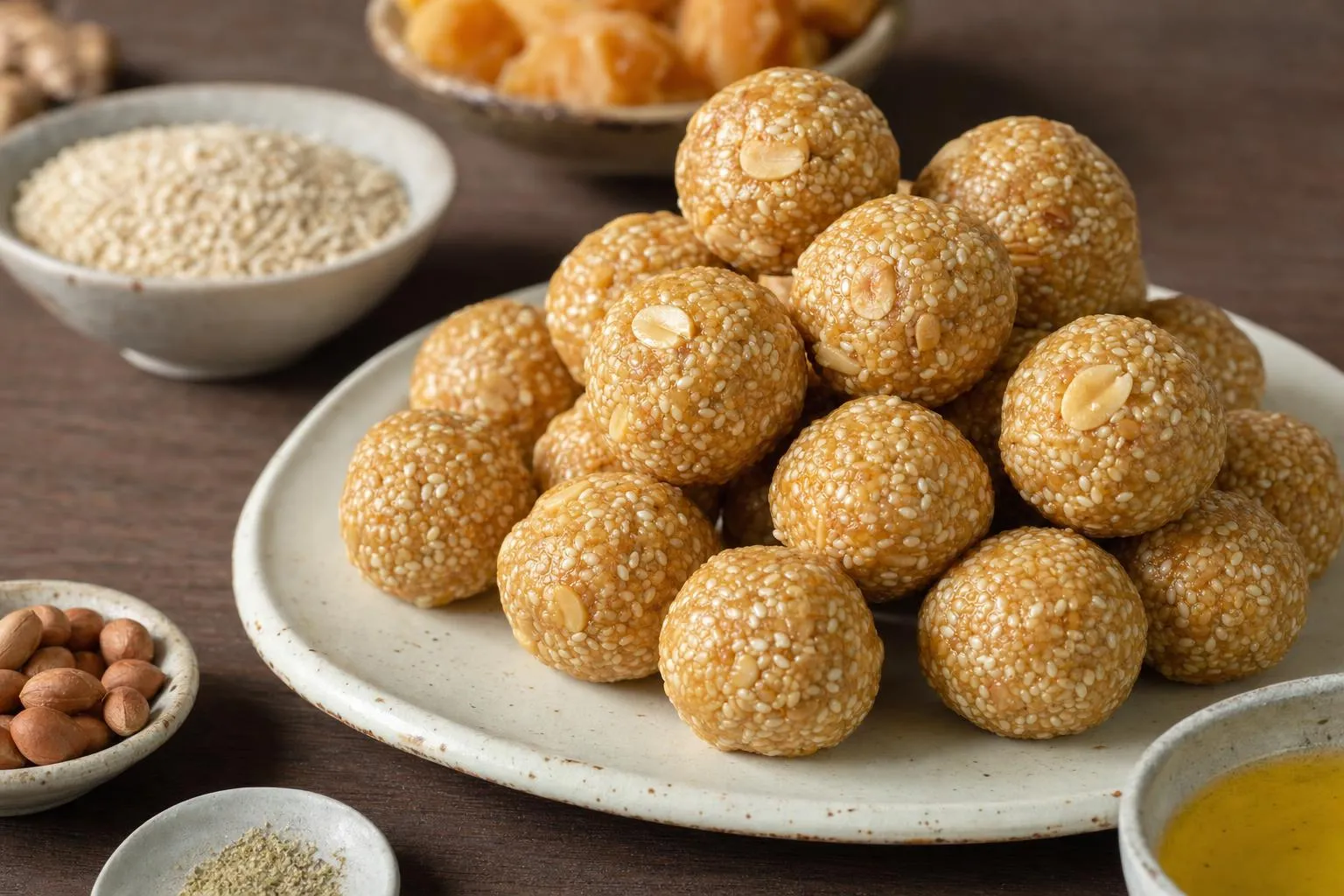 30 min
Til Ladoo (Sesame Jaggery Ladoo) for Sankranti
Toasted sesame and melted jaggery, shaped into warm balls the traditional Makar Sankranti way.
 1 hr
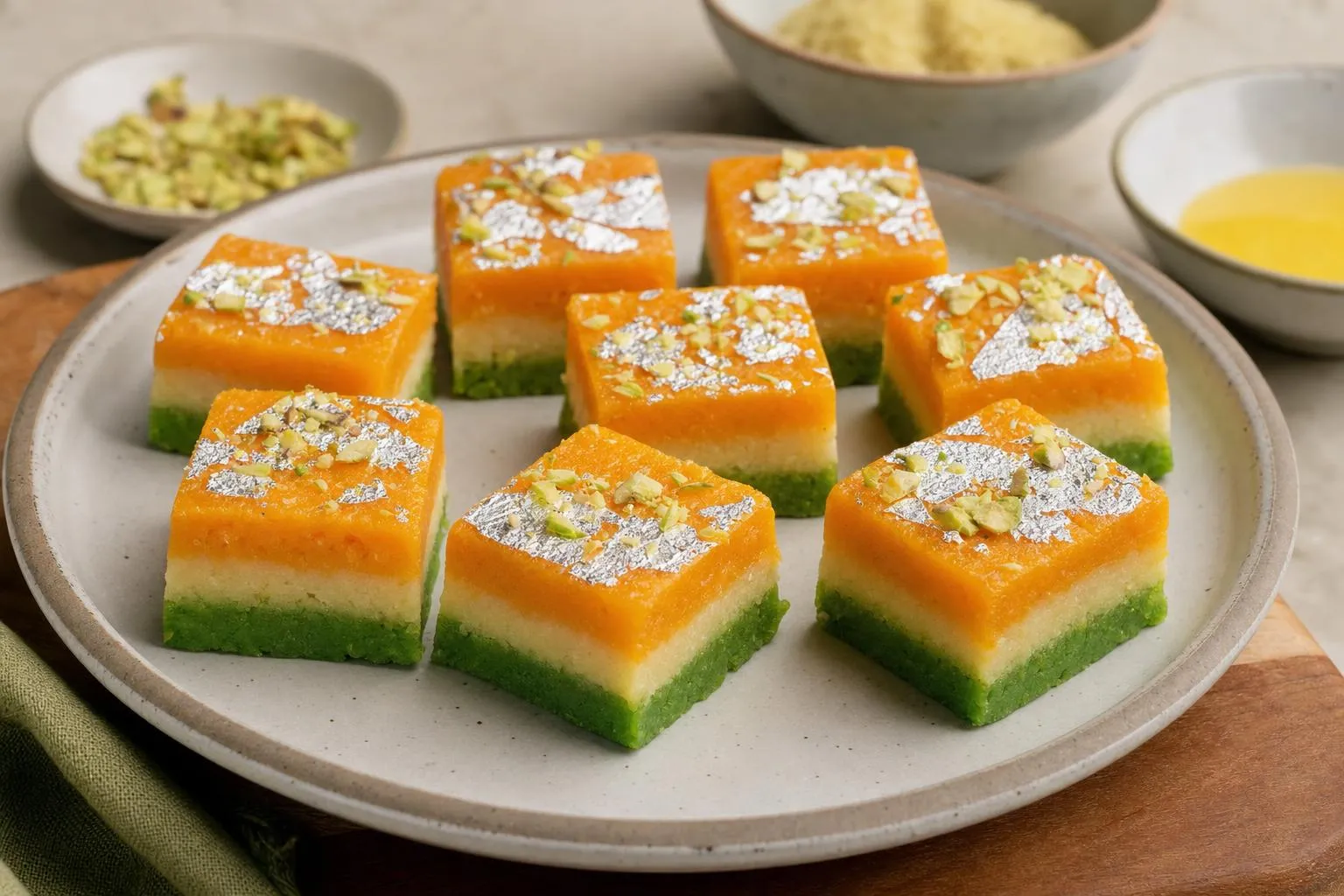
Tiranga Barfi (Three-Colour Barfi)
A khoya barfi built in three coloured layers that fuse into one slab if each pour is timed right.
 55 min
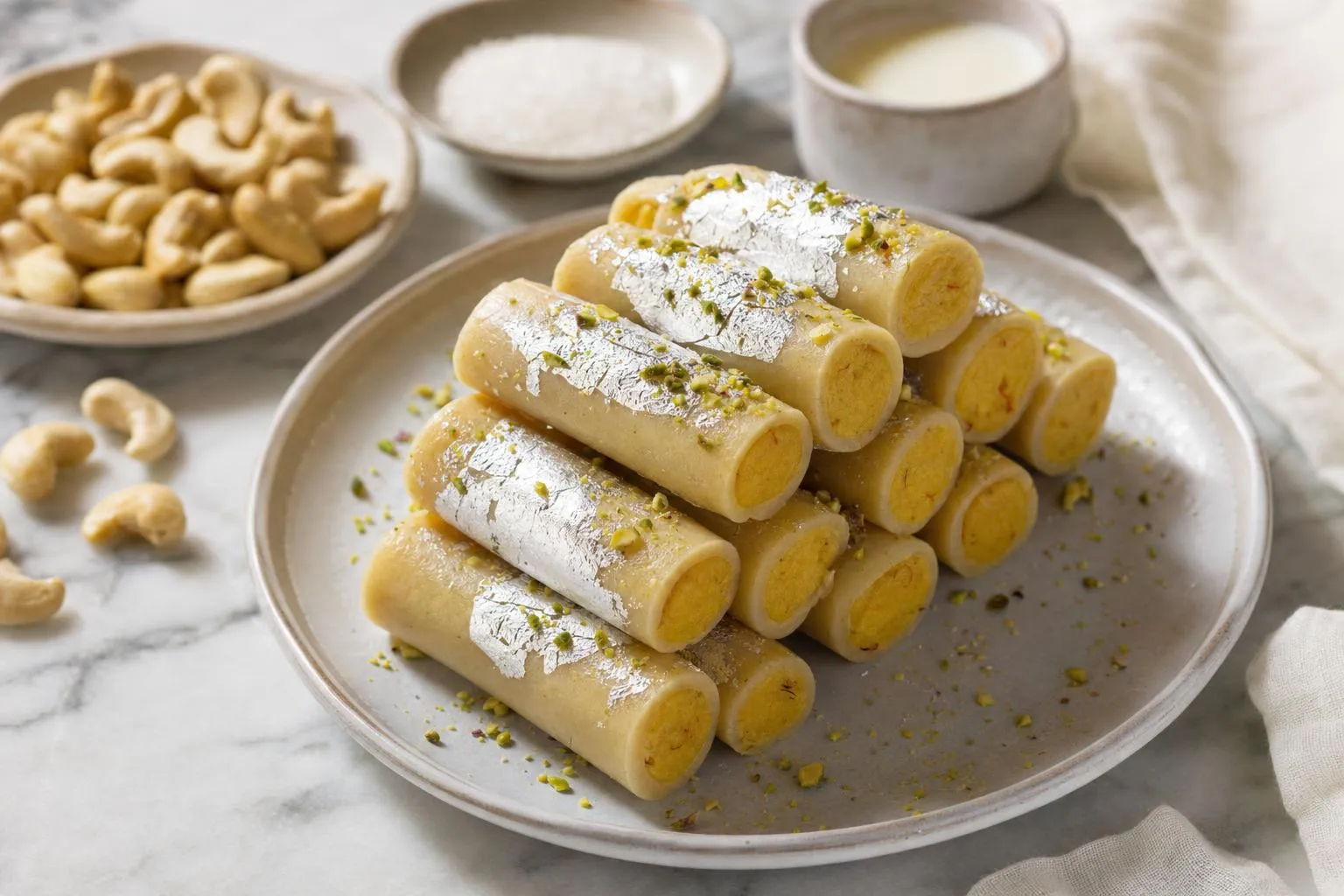
Kaju Roll (Cashew Rolls with Kesar Filling)
Thin sheets of cashew katli dough rolled around a saffron-cardamom filling, sliced into neat pinwheels.