
Khajur Barfi (No-Sugar Date Barfi)
A dense, chewy date-and-nut barfi that sets firm from the dates' own stickiness, with no sugar or khoya at all.
Khajur barfi is made by cooking mashed pitted dates in ghee until they turn into a glossy, jammy paste that pulls away from the pan, then folding in toasted nuts and cardamom, pressing the mixture into a log or tray, and chilling it firm before slicing. The whole recipe relies on using soft, moist dates (Medjool or Kimia, not dry Deglet Noor) — dry dates won't cook down smooth or bind the barfi, and it'll crumble instead of holding a clean slice.
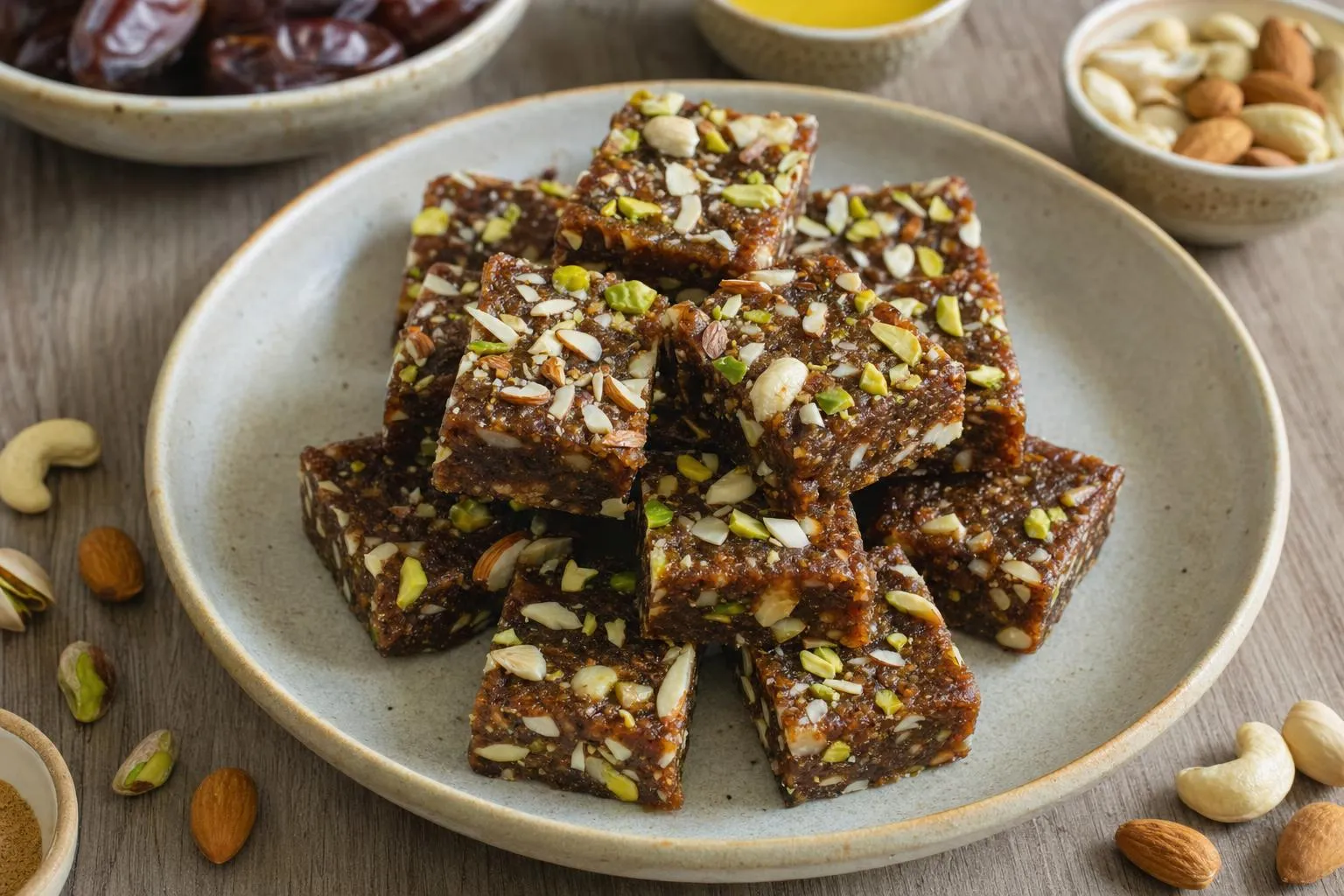
VegetarianNo wheat Contains no wheat as written. Vegan if you use a neutral coconut oil in place of the ghee and water rather than milk. Contains pistachios, almonds and cashews.
Most barfi needs something sweet added to it — a sugar syrup cooked to the right thread, or khoya, which is milk reduced down to a solid. Khajur barfi needs neither. The dates bring their own sugar and their own glue, and the entire method is about concentrating what is already in the fruit.
That makes it unusually forgiving in one way and unforgiving in another. There is no syrup stage to misjudge, unlike kaju katli, where a few seconds past one-string ruins the batch. But there is also nothing to hide behind. If the dates are poor, the barfi is poor, and no technique rescues it.
It has become a fixture of festival boxes for people avoiding refined sugar, and it travels better than most mithai. If you want another no-cook sweet for the same box, coconut ladoo sits alongside it well.
Why this works
Dates are roughly two-thirds sugar by weight, and that sugar is already dissolved in the fruit’s own moisture rather than sitting as dry crystals. Warming them in ghee drives off some of that water, and the sugars left behind concentrate into something thick and tacky. You are doing, in six or seven minutes and on a much smaller scale, what a sugar syrup does in a pan of water.
Dates also carry a lot of soluble fibre, which behaves a little like pectin in jam: it thickens as it heats and sets as it cools. That is what holds the nuts in suspension instead of letting them fall out of a sandy crumb. The ghee matters for more than flavour here — fat coats the fibre and keeps the finished barfi pliable rather than hard, which is why an oil-free version sets noticeably more brittle.
Tips
- Fold the pistachios in off the heat. Cashews and almonds take toasting well, but pistachios go dull and grey-green if they sit against a hot pan, and their colour is most of what makes the cut edge look good.
- Grease your palms with ghee when the paste sticks, never flour or water. Flour leaves a raw taste and water loosens a set you have just spent minutes building.
- Chill the log at least two hours and preferably overnight. Cold barfi cuts to a clean edge; warm barfi drags and smears however sharp the knife is.
Ingredients
Tap an ingredient to cross it off as you go.
Instructions
- Check your dates first: they should be soft, glossy, and almost sticky to the touch, not shrivelled or hard. If they feel dry, soak them in warm water for 15 minutes and pat completely dry before using — any leftover moisture will stop the barfi from setting.
- Warm 1 tbsp ghee in a heavy pan on low. Add the cashews and almonds and toast, stirring constantly, for 3-4 minutes until they turn a shade darker and smell distinctly roasted and nutty. Tip out onto a plate and let cool; reserve the pistachios raw for colour and bite.
- In the same pan, add the remaining 2 tbsp ghee and the pitted dates. Cook on low heat, mashing and stirring with a spatula, for 6-8 minutes. The dates will first clump, then loosen into a glossy, jammy paste that pulls together in one mass and starts leaving the sides of the pan — that's your doneness cue, not a set time.
- Take the pan off the heat. Stir in the cardamom, nutmeg, and salt while the paste is still warm and pliable. If it feels stiff and dry rather than pliable, work in the milk or water a teaspoon at a time — you want playdough consistency, not batter.
- Fold in the toasted cashews, almonds, and half the pistachios, saving the rest for pressing on top. Mix until the nuts are evenly distributed through the date mass.
- Turn the mixture onto a sheet of parchment or a lightly greased tray. While still warm, either roll it into a tight log about 1.5 inches thick, twisting the parchment ends like a candy wrapper, or press it into a greased 6x6 inch tin to an even 3/4 inch thickness. Scatter the reserved pistachios on top and press gently so they stick.
- Chill for at least 2 hours, or until firm to the touch and cool all the way through. A barfi that's still warm in the centre will squash and smear when you cut it.
- Slice with a sharp knife into rounds (if a log) or squares (if a tin), wiping the blade clean between cuts so the pieces have neat edges instead of dragged, sticky sides.
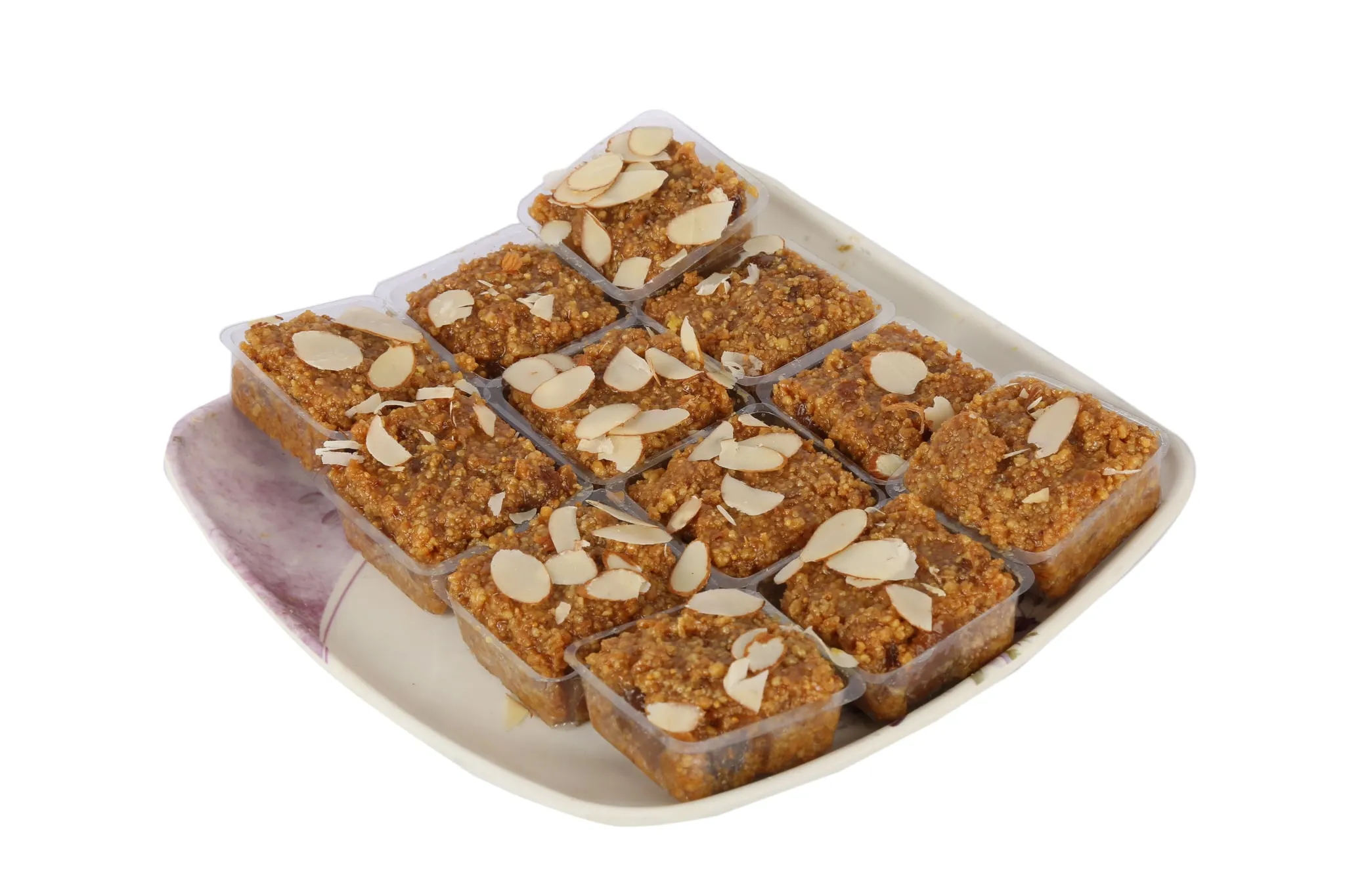
Ingredient guides: Khoya (Mawa)
Ingredient swaps for cooks abroad
- No Medjool or Kimia dates available: use any soft, fresh-tasting date and soak briefly in warm water, then drain and pat very dry before cooking — dry Deglet Noor-style dates won't bind into a smooth paste on their own.
- Ghee substitute: a neutral coconut oil works for a vegan version, though you lose the faint nutty-toffee smell ghee brings to the finished barfi.
- Nut mix flexibility: swap in walnuts, pecans, or dried figs/apricots for part of the nuts, keeping the total volume the same so the barfi still holds together.
- No cardamom pods on hand: pre-ground cardamom works, just use slightly less (3/4 tsp) since it's more concentrated and can turn bitter if overdone.
Frequently asked questions
- Which dates actually work for this?
- Medjool and Iranian Kimia are the reliable ones — plump, glossy and moist enough to mash into a cohesive paste. Dry pitted Deglet Noor, the kind sold in small boxes for baking, stay grainy and will not bind. If dry dates are all you can find, soak them in warm water for twenty minutes and dry them thoroughly before cooking.
- Does it need refrigerating?
- It keeps about a week at cool room temperature and three to four weeks refrigerated. Dates are naturally high in sugar and low in water, which makes this one of the more shelf-stable mithai, but a warm kitchen will soften the set. Let chilled pieces sit out for ten minutes before serving.
- Is this genuinely sugar-free?
- There is no added sugar, which is what the name promises, but dates are roughly two-thirds sugar by weight so the barfi is not low-sugar. It suits anyone avoiding refined sugar or cooking for a festival where that matters; it is not a diabetic sweet.
- My barfi crumbles when I slice it. Why?
- Almost always dry dates, which never formed a continuous paste to hold the nuts together. The other cause is slicing before the log is properly cold. Chill it at least two hours, and if the mixture felt sandy rather than sticky in the pan, the dates were the problem, not the method.
More no-cook sweets
View all →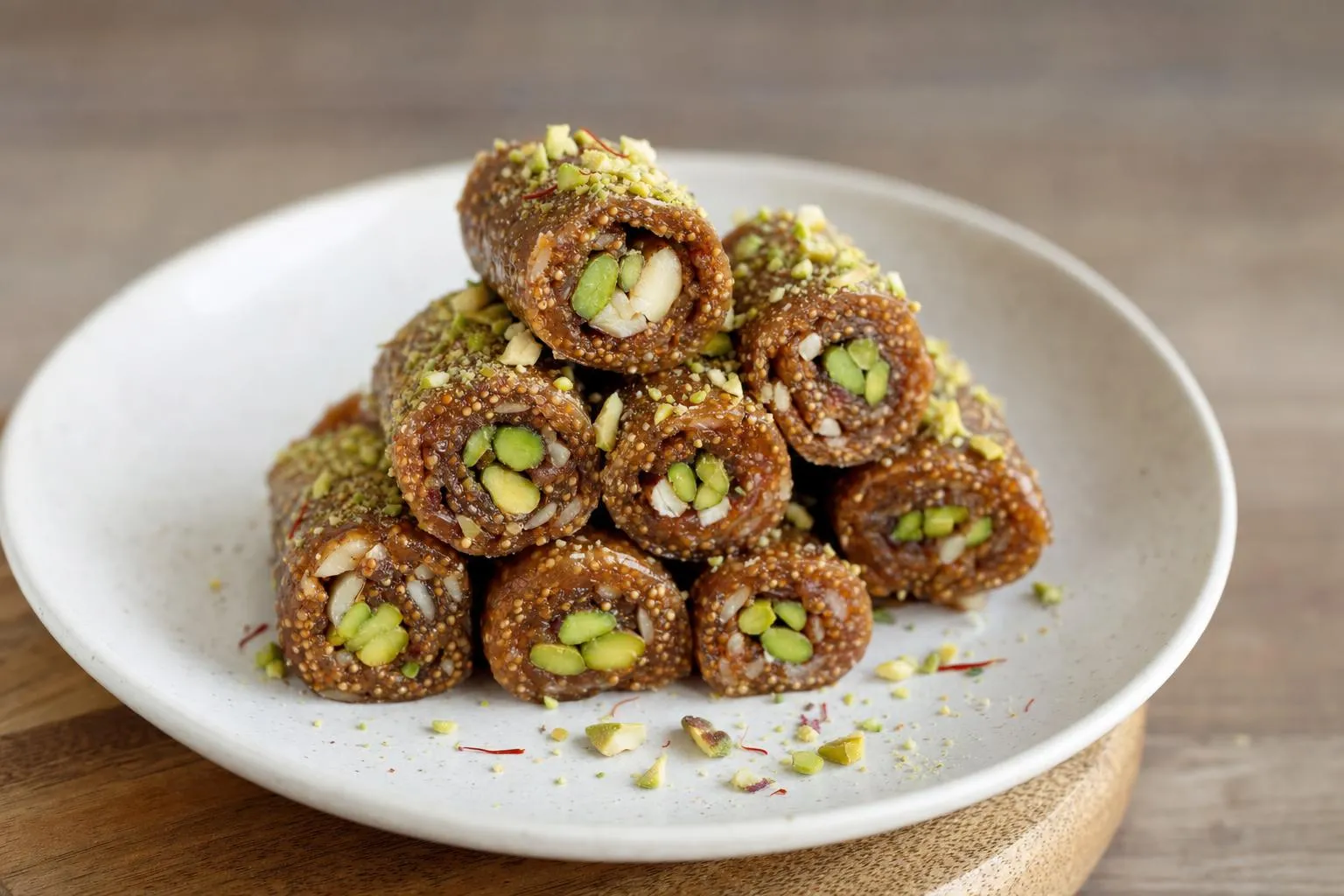 40 min
Anjeer Roll (Dried Fig Roll) with Pistachio Centre
Dried figs are simmered soft, blitzed to a dark paste, and rolled around a pistachio core that stays whole when sliced.
 20 min
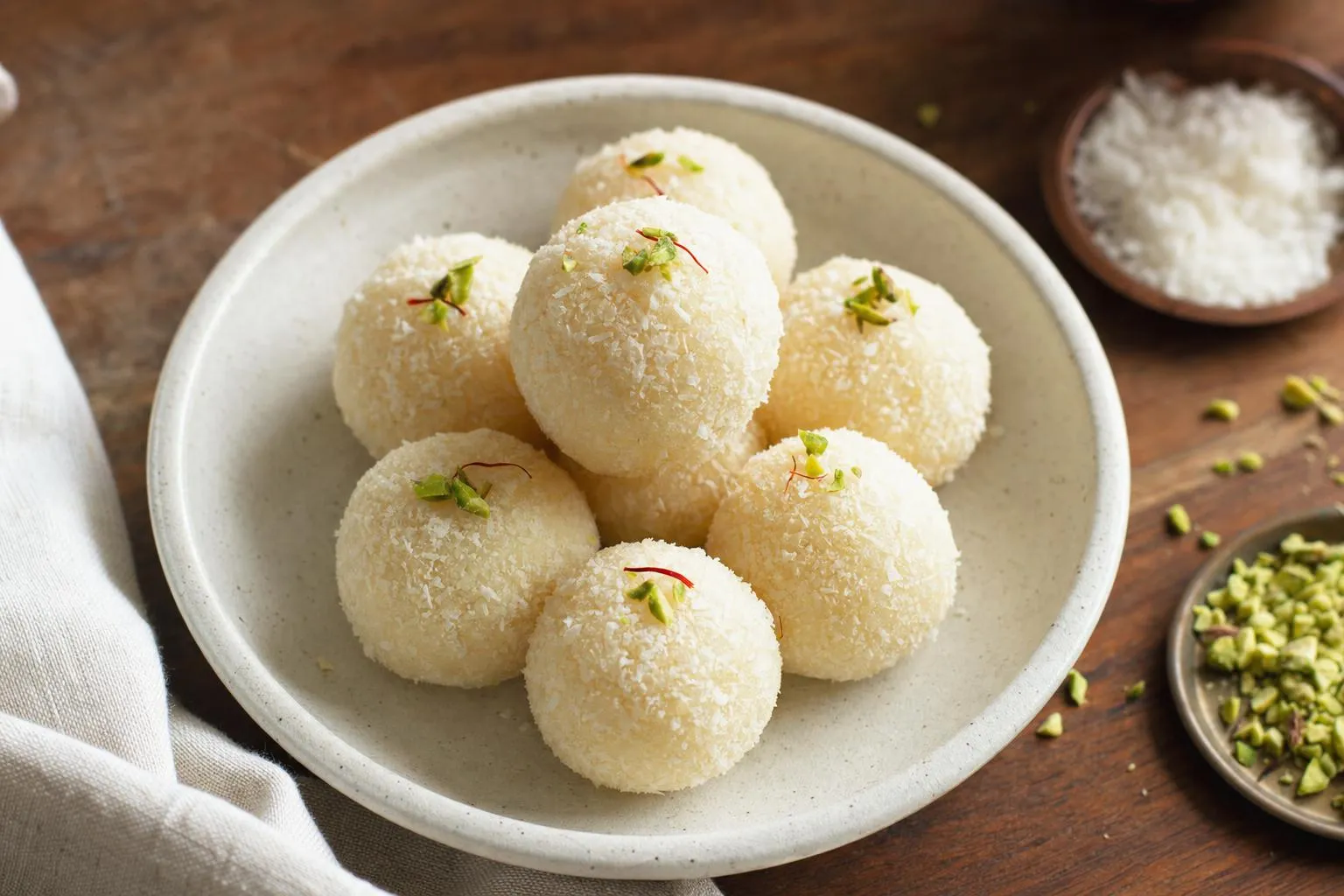
3-Ingredient Coconut Ladoo (Condensed Milk Coconut Ladoo)
A no-thermometer coconut ladoo made with condensed milk and desiccated coconut, done start to finish in about 20 minutes.
 20 min
Dry Fruit Ladoo (No Sugar, No Cooking)
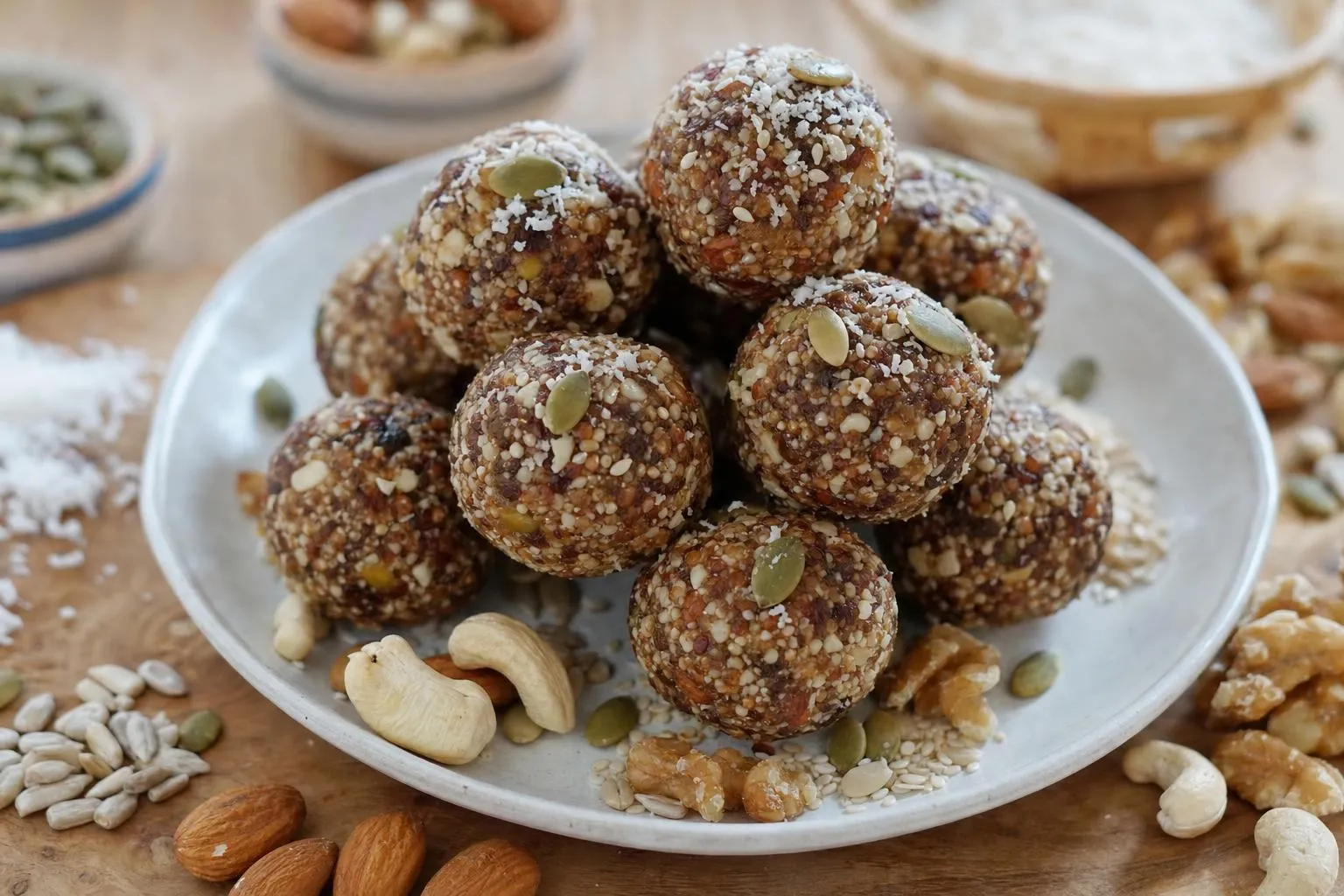
Dates, nuts and seeds ground to a sticky paste in the food processor and rolled, no stove involved.