
Anjeer Roll (Dried Fig Roll) with Pistachio Centre
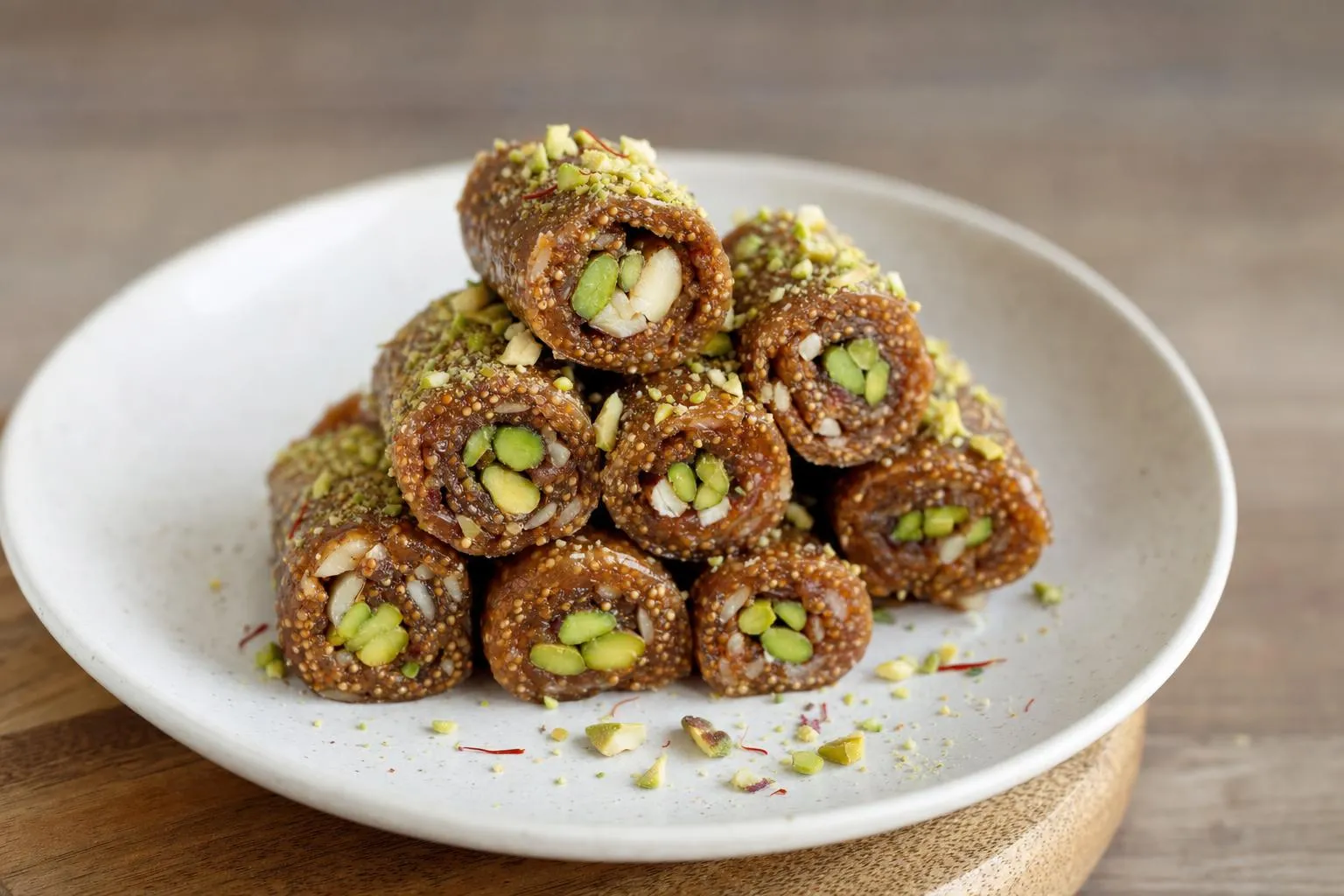
Dried figs are simmered soft, blitzed to a dark paste, and rolled around a pistachio core that stays whole when sliced.
Anjeer roll is made by simmering dried figs until soft, blending them to a thick paste, cooking off the excess moisture in ghee, then rolling that paste around a line of fried pistachios so each slice shows a nut centre. The one thing that makes or breaks it is cooking the paste dry enough before rolling — a wet paste will never set firm enough to slice cleanly, no matter how long you chill it.
VegetarianNo wheat Contains no wheat as written. Vegan if you soften the figs in water rather than milk and use coconut oil in place of the ghee. Contains pistachios and almonds.
Anjeer roll belongs to the family of no-cook or barely-cooked mithai that lean on dried fruit instead of sugar syrup for sweetness and structure. It’s close in spirit to khajur barfi, but figs behave differently from dates — they’re drier, less sticky on their own, and need a short simmer before they’ll bind into anything at all.
The appeal here is the contrast: a dark, slightly chewy fig paste on the outside, and a crisp pistachio line running through the centre that holds together when you cut it. Get the paste too wet and the roll slumps instead of slicing. Get the nuts loose instead of pressed into the paste and they scatter the moment the knife touches them. Both are fixable, and both come down to patience in two specific steps.
Why the paste has to be cooked, not just blended
Dried figs look soft when you buy them, but blitzing them straight from the packet gives you a stiff, fibrous paste that won’t roll — it cracks instead of folding. Softening them first in hot water or milk, then cooking that paste briefly in ghee, does two things: it breaks down the fig skins fully, and it drives off the extra liquid you just added. Skip the cooking step and the roll will “sweat” in the fridge, going sticky and soft at the edges within a day.
The same logic shows up in kaju katli, where getting the dough to the right dryness before shaping is the whole game. Here it’s the same idea with fruit instead of nuts: cook until the mass pulls together and looks matte rather than glossy, then stop. Over-cooking turns the paste leathery and hard to slice; under-cooking leaves it too soft to hold a roll shape in the fridge.
Ingredients
Tap an ingredient to cross it off as you go.
Instructions
- Snip the hard stem tip off each fig, then chop the figs roughly. Put them in a saucepan with the hot water or milk and set over low heat for 8-10 minutes, stirring now and then, until they're plump, glossy and squash easily between your fingers.
- Tip the softened figs and any remaining liquid into a food processor. Blitz to a thick, almost-smooth paste — it should look like dark fruit chutney, not a slurry. If it's still grainy, run the blade for another 30 seconds rather than adding more liquid.
- Warm 1 tablespoon of ghee in the same saucepan, add the fig paste back in, and cook on low heat for 4-5 minutes, stirring constantly. The paste will darken slightly and start pulling away from the sides in a mass — that's the moisture you need to drive off so the roll holds its shape later. Stir in the cardamom and sugar if using. Cool completely.
- Meanwhile, warm the remaining ghee in a small pan and fry the chopped pistachios and almonds for 1-2 minutes until just fragrant, not browned. Let them cool and crisp up slightly off the heat.
- Lay a sheet of cling film on the counter and turn the cooled fig paste out onto it. Press it with your palm into a rough rectangle about 7 inches by 5 inches, roughly 1/2 cm thick. Damp hands stop the paste sticking to you instead of the film.
- Scatter the fried pistachios and almonds in a straight line down the centre of the rectangle, leaving a clear border on both long edges. Press the nuts down lightly so they bed into the paste rather than sitting loose on top.
- Using the cling film to help, lift one long edge and roll the fig paste over the nut line, pressing gently as you go, until you have a tight log with the nuts running through the middle like a seam. Twist the ends of the film and roll the whole log on the counter a few times to even it out.
- Chill the wrapped log for at least 1 hour, or until firm to the touch. Unwrap, roll the outside in extra chopped pistachios, and slice into 1/2-inch rounds with a sharp, lightly oiled knife — wipe the blade between cuts for clean edges.
Ingredient swaps for cooks abroad
- No food processor: finely chop the softened figs by hand, then mash with the back of a spoon or a potato masher until pasty — it takes longer but works fine.
- Pistachios hard to find or pricey: swap in chopped cashews or walnuts for the centre; the roll will taste different but still hold its slice.
- Figs taste musty or very sweet already: skip the added sugar entirely and taste the paste before rolling — dried figs vary a lot batch to batch, especially the vacuum-packed ones sold abroad.
- Want it dairy-free: use hot water instead of milk to soften the figs and coconut oil in place of ghee; the texture stays the same.
Frequently asked questions
- How do I know the fig paste is cooked enough to roll?
- It should look matte rather than wet and shiny, and pull together into one mass that leaves the sides of the pan fairly clean when you stir. If it still looks glossy and sticks heavily to the spoon, give it another minute or two on low heat before cooling it.
- My roll cracked when I cut it — what went wrong?
- Cracking usually means the paste was slightly under-moist or over-chilled and stiffened too much before slicing. Let the log sit at room temperature for 5-10 minutes before cutting, and use a sharp knife wiped with a little oil or warm water between slices.
- What's the best way to scale this up for a festival platter?
- The recipe doubles cleanly — just use a wider pan so the fig paste cooks evenly rather than steaming in a deep pile, and make two shorter logs instead of one long one, since a shorter log is easier to roll tight and chill evenly.
- Is there a sugar-free version that still tastes sweet enough?
- Yes — ripe, plump dried figs are sweet enough on their own for most people, so the added sugar in the ingredient list is genuinely optional. Taste the cooked paste before deciding; only add sugar if the figs themselves taste more tart than sweet.
- Do I need any special equipment to make this at home?
- A small food processor makes the paste much faster, but you can mash softened figs by hand with a fork or potato masher if you don't own one. You'll also want cling film to roll and shape the log neatly.
- How long does anjeer roll keep?
- Wrapped and refrigerated, it keeps up to a week, and it slices more cleanly cold. If you softened the figs in water, it also keeps up to three days at cool room temperature. If you used milk, keep it in the fridge and leave it out only on the day you serve it. Either version freezes for up to a month, wrapped whole as a log.
More no-cook sweets
View all →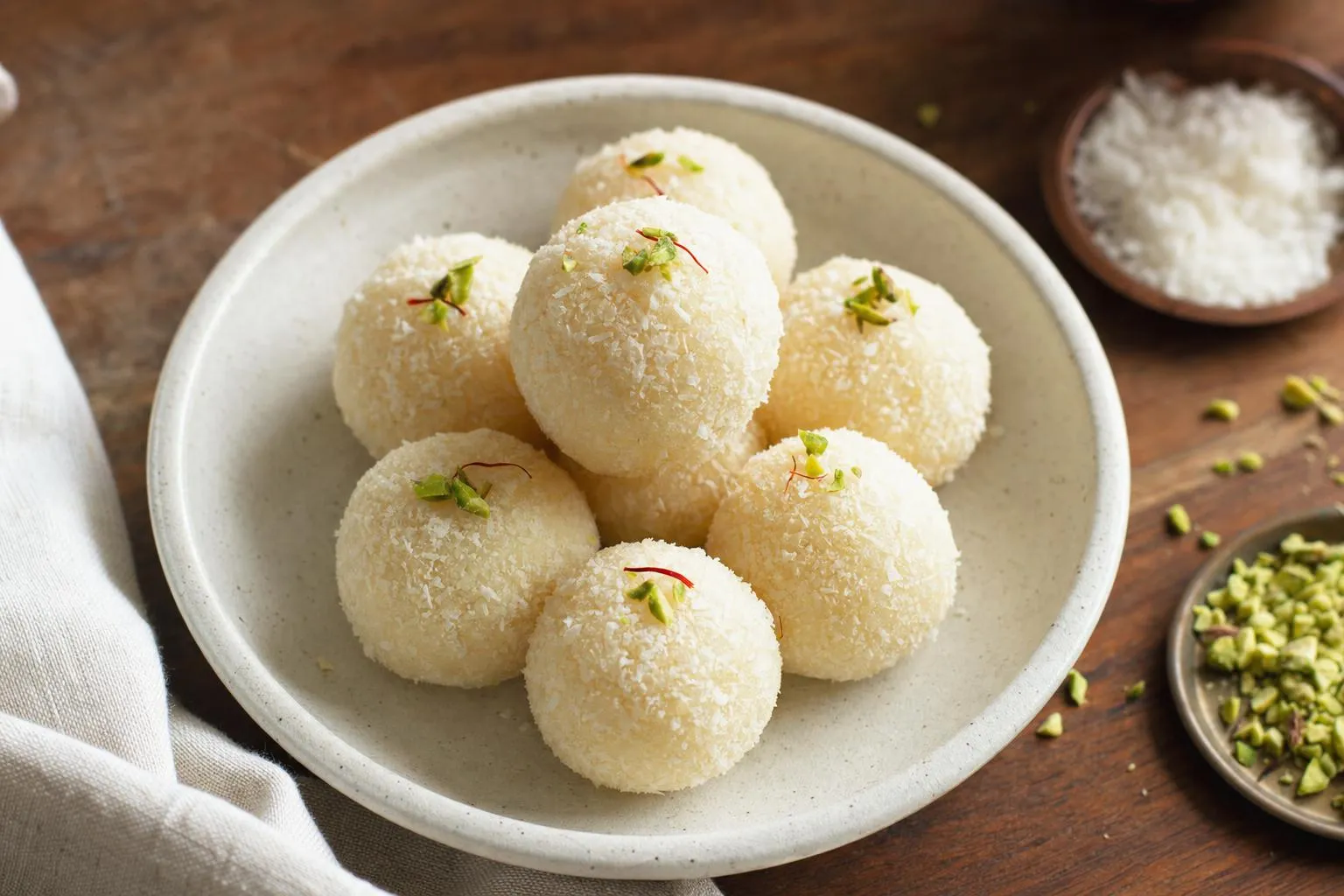 20 min
3-Ingredient Coconut Ladoo (Condensed Milk Coconut Ladoo)
A no-thermometer coconut ladoo made with condensed milk and desiccated coconut, done start to finish in about 20 minutes.
 20 min
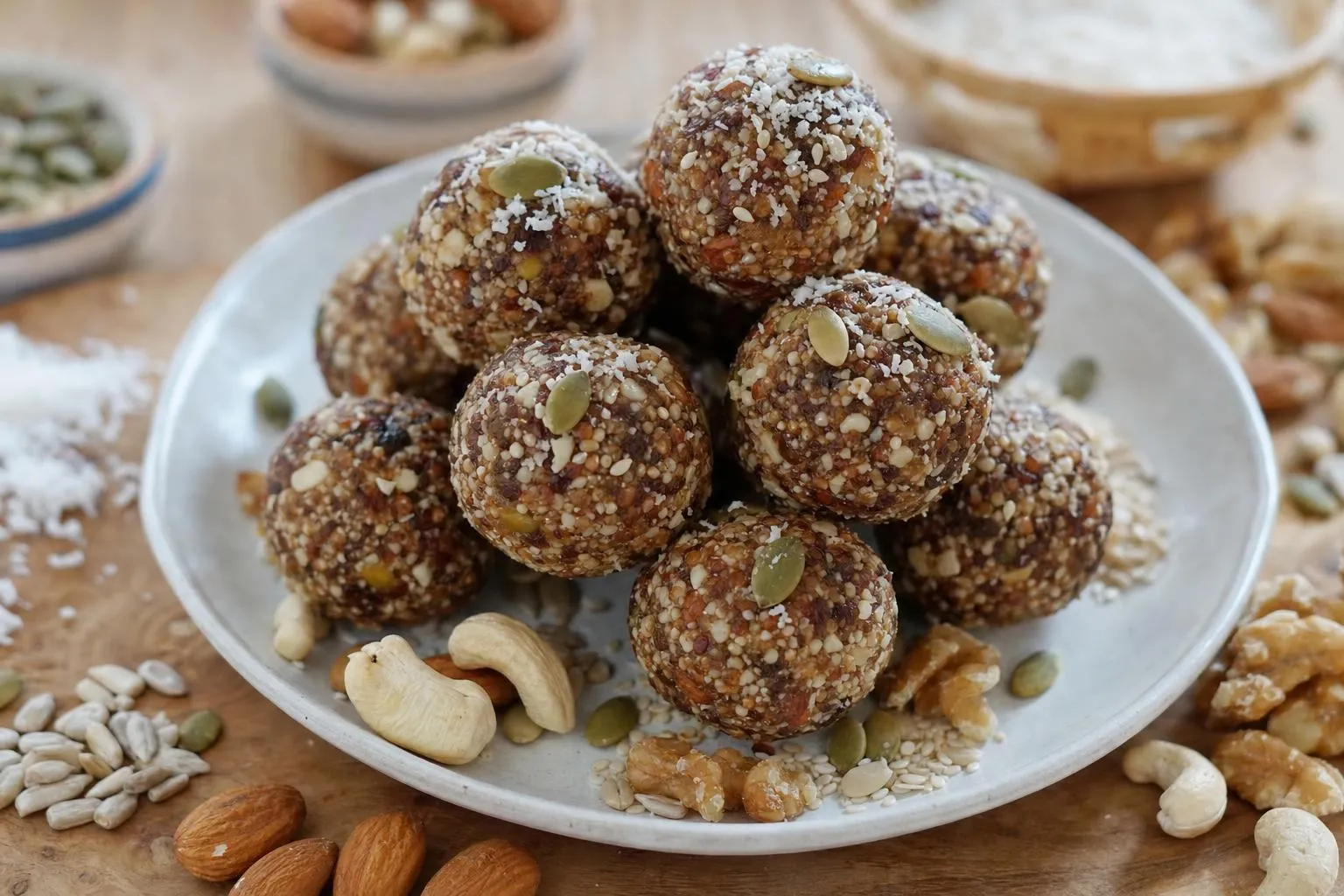
Dry Fruit Ladoo (No Sugar, No Cooking)
Dates, nuts and seeds ground to a sticky paste in the food processor and rolled, no stove involved.
 25 min
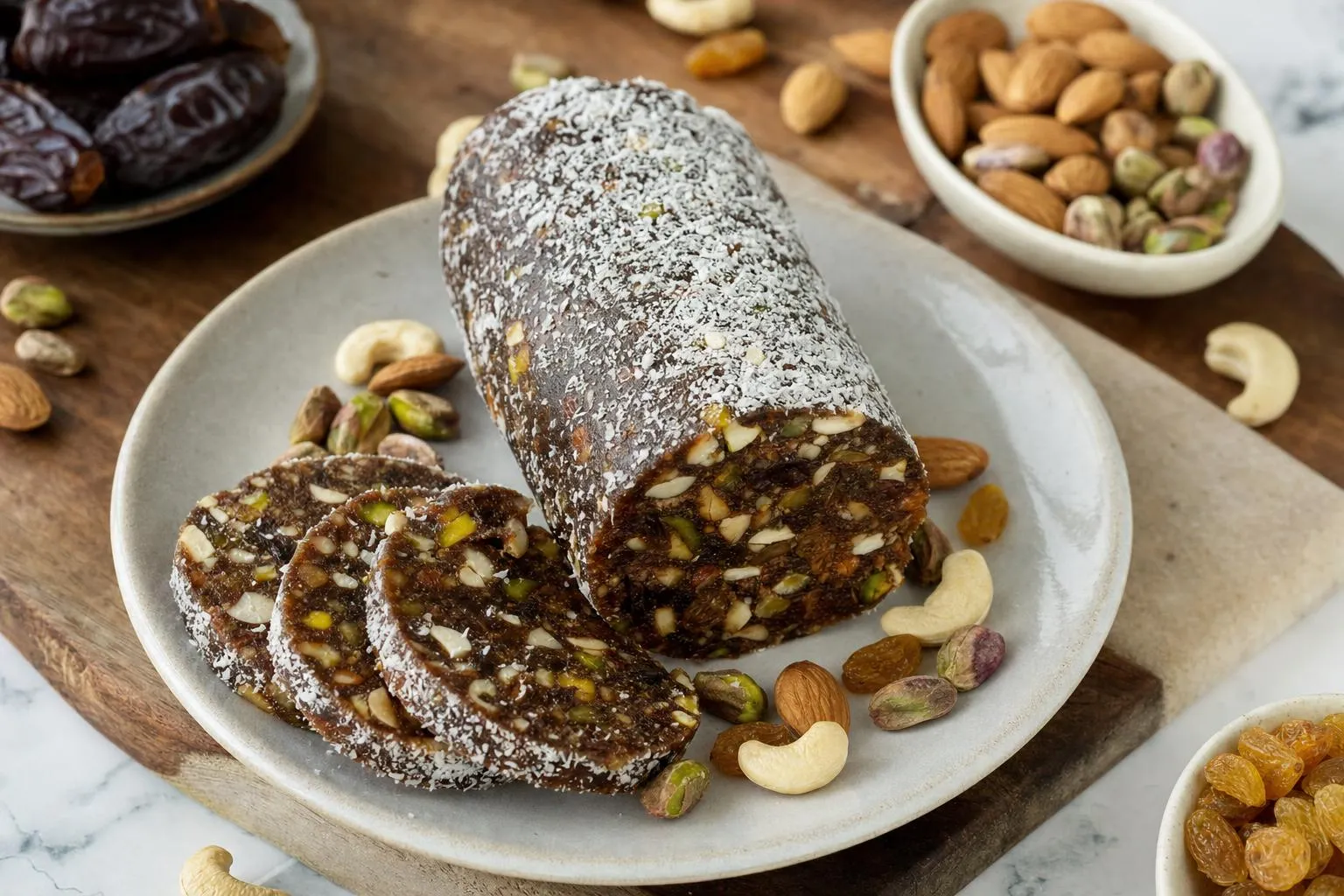
Dry Fruit Roll (Nut and Date Log)
A no-cook date and nut log that chills firm, then slices into neat coins like a mithai salami.